

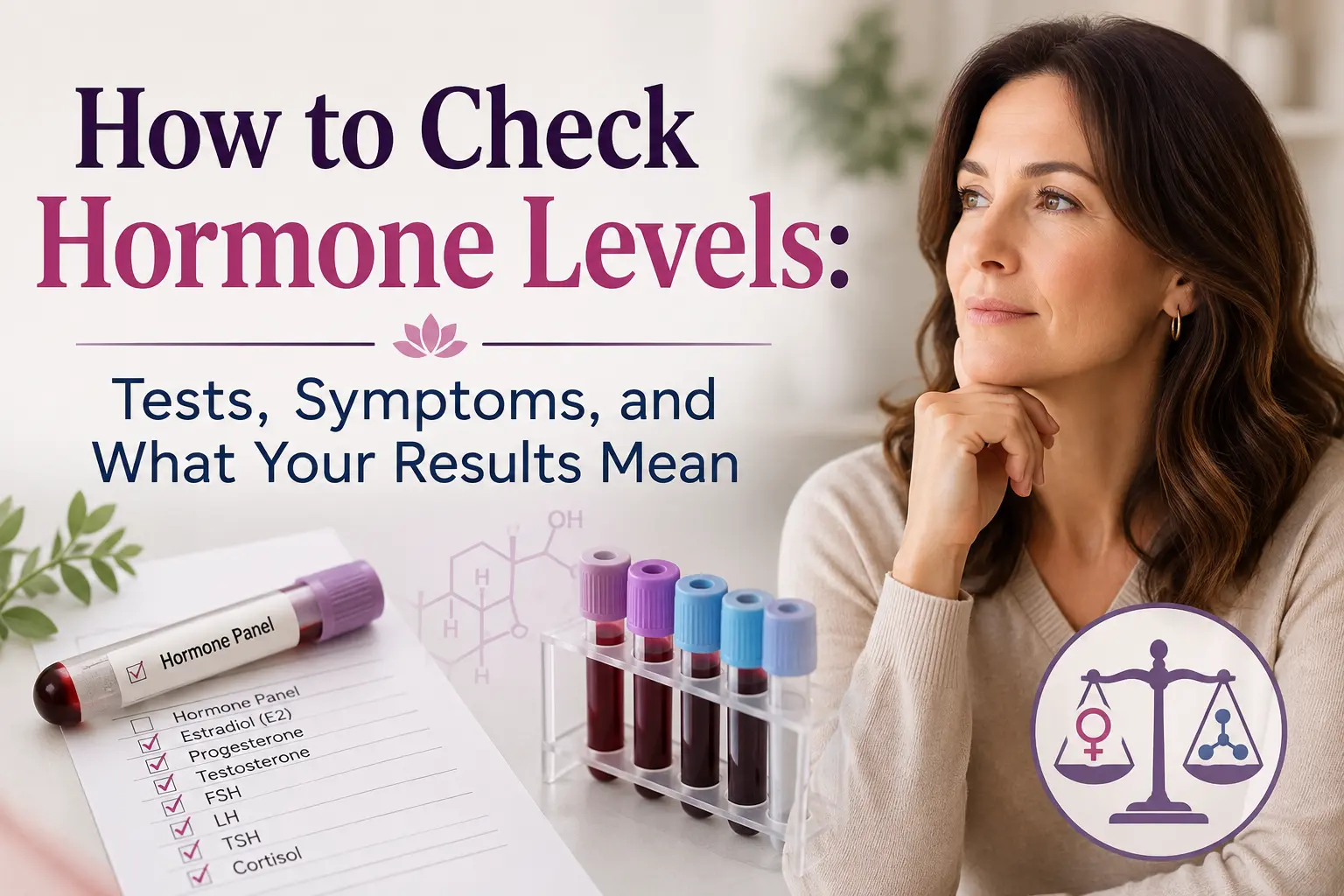
How to Check Hormone Levels
If you’ve been feeling tired all the time, struggling with weight gain, experiencing mood swings, or noticing changes in your menstrual cycle, hormones may be part of the reason.
Hormones affect nearly every system in the body.
They help regulate metabolism, energy levels, sleep, mood, fertility, sexual health, and reproductive function.
When hormone levels become too high or too low, symptoms can develop that affect your daily life and overall well-being.
The good news is that hormone testing can help identify potential imbalances and provide valuable insight into what’s happening inside your body.
Understanding how to test hormone levels, which hormones should be checked, and what your results mean and whether HRT is right for you can help you take the next step toward feeling better.
Quick Answer: How Do You Check Hormone Levels?
The most accurate way to check hormone levels is through laboratory testing ordered by a healthcare provider.
A hormone blood test can measure estrogen, progesterone, testosterone, thyroid hormones, cortisol, follicle-stimulating hormone (FSH), luteinizing hormone (LH), and other important hormones.
Depending on your symptoms, saliva tests, urine tests, or at-home hormone tests may also be used, but blood testing is generally considered the most comprehensive and reliable method.
How Do I Know If I Need My Hormone Levels Checked?
Many women live with hormone imbalance symptoms for months or even years before seeking testing because the symptoms can be subtle or develop gradually.
You may want to consider hormone testing if you’re experiencing:
- Persistent fatigue
- Weight gain or difficulty losing weight
- Mood swings
- Anxiety or depression
- Brain fog
- Low libido
- Irregular periods
- Heavy menstrual bleeding
- Difficulty getting pregnant
- Hair thinning or hair loss
- Hot flashes
- Night sweats
- Sleep problems
- Decreased muscle mass
- Changes in appetite
While these symptoms don’t always indicate a hormone imbalance, testing can help determine whether hormones are contributing to the issue.
What Are Hormones and Why Are They Important?
Hormones are chemical messengers produced by glands throughout the body.
They travel through the bloodstream and tell organs and tissues how to function.
Some of the body’s most important hormones help regulate:
- Metabolism
- Body weight
- Energy production
- Reproductive health
- Fertility
- Mood
- Stress response
- Sleep cycles
- Bone health
- Sexual function
When hormones become imbalanced, these systems may not function as efficiently as they should.
For women, hormone fluctuations naturally occur during puberty, pregnancy, perimenopause, and menopause.
However, significant imbalances can occur at any age.
How to Check Hormone Levels: Step-by-Step
Many women wonder exactly what the process involves.
Fortunately, checking hormone levels is usually straightforward.
Step 1: Schedule an Evaluation
The first step is meeting with a healthcare provider who can review your symptoms, medical history, medications, and overall health.
Step 2: Discuss Your Symptoms
Your provider will ask questions about:
- Menstrual cycles
- Energy levels
- Weight changes
- Sleep patterns
- Mood changes
- Sexual health
- Fertility concerns
- Family medical history
These details help determine which hormones should be tested.
Step 3: Complete Hormone Testing
Most hormone testing is done through a blood sample.
Depending on your symptoms, your provider may order a single hormone test or a comprehensive hormone panel.
Step 4: Review Your Results
Once your results are available, your provider will review them alongside your symptoms and health history.
Step 5: Create a Treatment Plan
If an imbalance is identified, treatment options can be discussed based on your individual needs and goals.
How Do Doctors Test Hormone Levels?
Several testing methods may be used depending on the situation.
Blood Tests
Blood testing is the most common hormone level test and is often considered the gold standard for evaluating hormone health.
A hormone blood test can measure:
- Estrogen
- Progesterone
- Testosterone
- Thyroid hormones
- Cortisol
- FSH
- LH
- DHEA-S
- Insulin
Blood testing provides precise measurements and allows providers to evaluate multiple hormones at the same time.
Saliva Tests
Saliva testing measures certain hormones present in saliva.
Some providers use saliva testing to evaluate cortisol levels throughout the day or assess certain reproductive hormones.
While useful in specific situations, saliva testing is generally less comprehensive than blood testing.
Urine Tests
Urine hormone testing measures hormones and hormone metabolites.
Certain advanced hormone panels use urine samples to provide a broader view of hormone production and metabolism.
At-Home Hormone Tests
At-home hormone testing kits allow individuals to collect samples at home and send them to a laboratory for analysis.
These tests may involve:
- Finger-prick blood samples
- Saliva samples
- Urine samples
While convenient, at-home tests may not provide the same level of interpretation and follow-up care as testing ordered through a healthcare provider.
Which Hormones Are Commonly Tested?
The hormones included in your testing will depend on your symptoms and health goals.
Estrogen
Estrogen affects reproductive health, mood, cardiovascular health, skin health, and bone strength.
Low estrogen symptoms may contribute to:
- Hot flashes
- Vaginal dryness
- Mood changes
- Sleep disturbances
- Low libido
Progesterone
Progesterone helps regulate the menstrual cycle and supports pregnancy.
Low progesterone levels may be associated with:
- PMS symptoms
- Irregular periods
- Fertility issues
- Mood changes
Testosterone
Women produce testosterone as well as men, although in smaller amounts.
Low testosterone levels may cause:
- Fatigue
- Reduced muscle mass
- Low libido
- Difficulty concentrating
Thyroid Hormones
The thyroid controls metabolism and energy production.
Abnormal thyroid hormone levels can contribute to:
- Weight gain
- Weight loss
- Fatigue
- Hair loss
- Brain fog
- Depression
Cortisol
Cortisol is known as the body’s primary stress hormone.
Imbalances may cause:
- Fatigue
- Sleep disturbances
- Weight gain
- Anxiety
- Difficulty concentrating
A hormone panel is a group of laboratory tests that evaluates multiple hormones at the same time.
Rather than looking at a single hormone, a hormone panel provides a more complete picture of overall hormonal health.
A female hormone panel may include:
| Hormone | What It Helps Evaluate |
| Estrogen | Reproductive health and menopause |
| Progesterone | Ovulation and fertility |
| Testosterone | Energy and libido |
| FSH | Ovarian function |
| LH | Ovulation and reproductive health |
| Thyroid Hormones | Metabolism and energy |
| Cortisol | Stress Response |
| DHEA-S | Adrenal Health |
For many women, a hormone panel blood test offers the most useful information because hormones often work together rather than independently.
When Is the Best Time to Test Hormone Levels?
Timing matters because hormone levels naturally fluctuate.
For women who still menstruate, certain hormones are often tested during specific phases of the menstrual cycle.
For example:
FSH and LH are commonly tested early in the menstrual cycle.
Progesterone is often tested approximately one week after ovulation.
Fertility testing may require testing at multiple points during the month.
Women who are perimenopausal or menopausal may require a different testing schedule due to fluctuating hormone levels.
Your healthcare provider can recommend the best time to check hormone levels based on your symptoms and cycle.
Can You Check Hormone Levels at Home?
Yes, but there are limitations.
At-home hormone tests can be helpful for initial screening and may provide useful information about certain hormone levels.
However, they cannot replace a comprehensive evaluation from a healthcare provider.
At-Home Testing vs Clinical Testing
| At-Home Testing | Clinical Testing |
| Convenient | Comprehensive |
| Self-ordered | Provider-guided |
| Limited interpretation | Professional analysis |
| Useful for screening | Useful for diagnosis |
| May test fewer hormones | Often includes complete hormone panels |
For women experiencing persistent symptoms, clinical hormone testing is typically the most reliable option.
Understanding Your Hormone Test Results
Many women assume a normal laboratory result automatically means their hormones are not contributing to their symptoms.
Hormone interpretation is often more complicated.
Results can be influenced by:
- Age
- Menstrual cycle phase
- Pregnancy
- Menopause
- Medications
- Stress levels
- Existing medical conditions
This is why healthcare providers evaluate both symptoms and laboratory findings when making recommendations.
What Happens If Your Hormone Levels Are Abnormal?
If testing identifies a hormone imbalance, treatment will depend on which hormones are affected and how severe your symptoms are.
Potential treatment options may include:
- Lifestyle changes
- Nutritional support
- Weight management strategies
- Stress reduction techniques
- Thyroid treatment
- Hormone replacement therapy
- Bioidentical hormone replacement therapy (BHRT)
The goal is to improve symptoms while supporting overall health and hormone balance.
Hormone Testing at Women’s Wellness of Mississippi
If you’re experiencing symptoms such as fatigue, unexplained weight gain, mood changes, low libido, irregular periods, hot flashes, or sleep disturbances, hormone testing can help identify whether an imbalance may be contributing to the problem.
At Women’s Wellness of Mississippi, we take a personalized approach to hormone health and HRT.
Our team evaluates your symptoms, reviews your medical history, and performs comprehensive hormone testing to better understand your unique needs.
Based on your results, we can create a customized treatment plan designed to help restore balance and improve your quality of life.
Whether you’re dealing with symptoms related to perimenopause, menopause, thyroid dysfunction, or another hormone-related condition, understanding your hormone levels is often the first step toward finding answers.
Final Thoughts: How to Check Hormone Levels
Knowing how to check hormone levels can help you better understand symptoms that may otherwise feel confusing or frustrating.
Hormone testing provides valuable information about your health and can identify imbalances that may be affecting your energy, mood, weight, sleep, reproductive health, and overall well-being.
If you suspect a hormone imbalance, speaking with a qualified healthcare provider can help determine which tests are appropriate and what steps to take next.
FAQs: How to Check Hormone Levels
How do I get my hormone levels checked?
The most common way to get your hormone levels checked is through a blood test ordered by a healthcare provider. Depending on your symptoms, your provider may recommend testing hormones such as estrogen, progesterone, testosterone, thyroid hormones, cortisol, FSH, and LH. Some at-home hormone tests are available, but professional testing typically provides more comprehensive results and expert interpretation.
What are the signs of hormone imbalance?
Hormone imbalance symptoms can vary depending on which hormones are affected. Common signs include fatigue, weight gain, mood swings, anxiety, depression, brain fog, low libido, irregular periods, hot flashes, night sweats, hair loss, sleep problems, and difficulty concentrating. If these symptoms persist, hormone testing may help identify the underlying cause.
How to check hormone levels at home?
You can check hormone levels at home using hormone testing kits that require a saliva sample, urine sample, or finger-prick blood sample. After collecting the sample, it is sent to a laboratory for analysis. While these tests can provide useful information, they may not offer the same level of accuracy, interpretation, or follow-up care as testing ordered through a healthcare provider.
How can I test my hormonal imbalance?
Testing for a hormonal imbalance usually begins with a consultation and a review of your symptoms. A healthcare provider may order blood tests, saliva tests, urine tests, or a hormone panel to evaluate hormone levels. The best testing method depends on your symptoms, age, health history, and the specific hormones being assessed.
How do I fix my hormonal balance?
The best way to address a hormone imbalance depends on the cause. Treatment may include lifestyle changes, improved nutrition, stress management, exercise, weight management, thyroid treatment, or hormone replacement therapy. A healthcare provider can recommend a personalized plan based on your symptoms and hormone test results.