
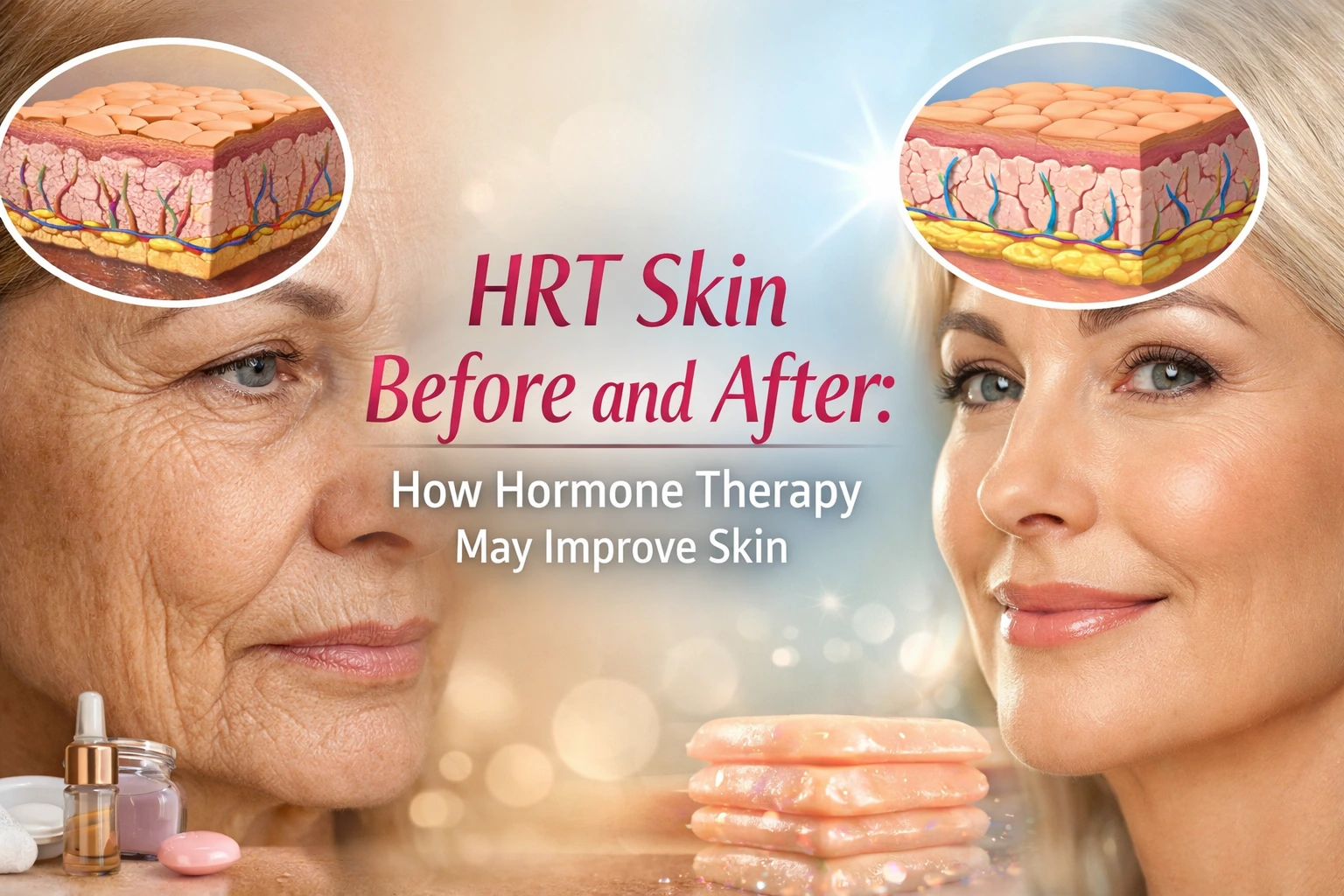
HRT Skin Before and After
Many women notice changes in their skin during perimenopause and menopause.
Skin may feel thinner, drier, or less elastic than it used to.
Fine lines can appear more quickly, and the complexion may lose some of its natural glow.
These changes often happen because estrogen levels decline, which affects collagen production, hydration, and skin structure.
Hormone replacement therapy (HRT) may help restore hormone balance, and some women report noticeable improvements in their skin after treatment.
Below, we’ll explore HRT skin before and after changes, why hormones affect skin health, and what results women may realistically expect.
Quick Answer: HRT Skin Before and After
Hormone replacement therapy may improve skin by restoring estrogen levels that support collagen production, hydration, and elasticity.
Some women notice smoother, more hydrated skin within a few months of starting treatment.
Over time, improved collagen levels may help skin appear firmer and more resilient.
Results vary depending on age, hormone levels, and overall health.
Why Hormones Affect Skin
Hormones play a major role in maintaining healthy skin.
Estrogen, in particular, supports several processes that keep skin looking firm, hydrated, and youthful.
Estrogen helps:
- Stimulate collagen production
- Maintain skin thickness
- Improve elasticity
- Support hydration
- Promote healthy blood flow to the skin
When estrogen levels decline during menopause, these processes slow down.
This can lead to common signs of hormonal skin aging such as dryness, wrinkles, and sagging.
Research suggests that women may lose a significant portion of their skin collagen in the early years after menopause.
Collagen loss contributes to thinner skin and increased wrinkle formation, which is why many women notice sudden changes in their skin during this stage of life.
What Is “Low Estrogen Face”?
Some women describe the visible effects of hormonal skin aging as “low estrogen face.”
This term refers to the facial changes that may occur when estrogen levels decline.
Low estrogen can affect the skin’s structure, hydration, and elasticity.
Common Signs of Low Estrogen Face
- Thinner skin
- Increased wrinkles
- Loss of skin firmness
- Hollow or sunken appearance
- Dry or rough skin texture
- Reduced facial glow
These changes are largely connected to reduced collagen production and lower skin hydration levels.
What Skin Often Looks Like Before HRT
Many women considering hormone therapy are dealing with noticeable skin changes linked to hormonal shifts.
Common skin concerns before HRT may include:
- Dryness or dehydration
- Fine lines and wrinkles
- Loss of skin elasticity
- Thinning skin
- Dull complexion
- Increased skin sensitivity
Skin Changes Often Seen With Low Estrogen
| Skin Change | Why It Happens |
| Dry or flaky skin | Estrogen helps maintain moisture and oil balance |
| Fine lines and wrinkles | Reduced collagen and elastin |
| Sagging skin | Loss of structural support in the skin |
| Dull complexion | Slower cell turnover and reduced circulation |
| Increased sensitivity | Thinner skin barrier |
For many women, these changes develop gradually but can become more noticeable during perimenopause and menopause.
HRT Skin Before and After: How Hormone Therapy May Improve Skin
When hormone levels are restored through HRT, some women notice improvements in their skin’s appearance and texture.
These changes typically occur gradually as hormone levels stabilize and the skin begins producing more collagen.
Improved Hydration
One of the earliest changes many women notice is better skin hydration.
Estrogen helps maintain moisture balance, which can reduce dryness and flakiness.
Smoother Skin Texture
Improved hydration and healthy skin cell turnover may help skin feel softer and smoother.
Increased Collagen Production
Estrogen plays a key role in collagen production.
Collagen is the protein responsible for skin strength and structure.
When collagen production increases, skin may appear firmer and more resilient.
Improved Skin Elasticity
Elasticity allows skin to stretch and return to its original shape.
Some women notice firmer-looking skin after several months of hormone therapy.
Reduced Appearance of Fine Lines
HRT is not a cosmetic wrinkle treatment, but improvements in hydration and collagen may soften the appearance of fine lines.
HRT Skin Transformation Timeline
Skin improvements from hormone therapy usually occur gradually.
The timeline varies depending on hormone levels, age, and overall skin health.
| Time on HRT | Possible Skin Changes |
| 1–2 months | Improved hydration and reduced dryness |
| 3–4 months | Skin texture may begin to appear smoother |
| 6 months | Collagen production may increase, improving firmness |
| 12 months | Skin may appear thicker, healthier, and more elastic |
Some women notice subtle changes earlier, while others experience gradual improvements over a longer period.
HRT Skin Before and After Results
The differences between skin before and after hormone therapy may become more noticeable over time.
| Before HRT | After HRT |
| Dry or dull skin | Improved hydration and natural glow |
| Fine wrinkles | Softer appearance of fine lines |
| Thinning skin | Increased skin thickness |
| Reduced elasticity | Firmer skin |
| Rough texture | Smoother skin surface |
Results can vary from person to person, but many women notice improvements in skin quality once hormone balance is restored.
How Long Does HRT Take to Improve Skin?
Skin improvements from hormone therapy do not happen overnight.
The skin needs time to respond to restored hormone levels.
Many women experience changes in stages.
Early improvements may include better hydration and reduced dryness.
Over time, collagen production may increase, which can improve firmness and elasticity.
Most women who notice skin improvements report gradual changes over three to twelve months.
How HRT May Help Improve Skin Health
Hormone therapy may support skin health in several ways.
Supporting Collagen Production
Estrogen stimulates fibroblasts, the cells responsible for producing collagen and elastin.
These proteins help maintain the skin’s strength and flexibility.
Improving Skin Thickness
Low estrogen levels can cause skin to become thinner.
Hormone therapy may help restore some of this thickness over time.
Increasing Skin Hydration
Estrogen helps maintain the skin’s natural barrier and oil balance, which supports moisture retention.
Improving Blood Flow
Healthy circulation helps deliver oxygen and nutrients to skin cells, which supports a more vibrant complexion.
Factors That Influence HRT Skin Results
Not every woman experiences the same skin changes with hormone therapy.
Several factors can influence how the skin responds.
| Factor | How It Influences Results |
| Age | Younger skin may respond more quickly |
| Hormone levels | Lower estrogen may show greater improvement |
| Lifestyle habits | Diet, stress, and sleep affect skin health |
| Skincare routine | Sunscreen and hydration support skin repair |
| Sun exposure | UV damage may slow visible improvements |
Taking care of skin with healthy habits and sun protection can support better long-term results.
HRT vs Skincare: What’s the Difference?
Many skincare products focus on improving the skin’s surface.
While these products can help with hydration and texture, they do not address the underlying hormonal changes that affect skin during menopause.
| Approach | How It Works |
| Skincare products | Improve hydration and surface appearance |
| HRT | Addresses hormonal changes that affect collagen and skin structure |
For many women, combining a healthy skincare routine with hormone therapy may provide the best overall results.
Who May Notice the Biggest Skin Improvements
Some women experience more noticeable skin changes with HRT than others.
Women who may see greater improvements include those who:
- Are experiencing perimenopause or menopause
- Have low estrogen levels
- Notice significant dryness or thinning skin
- Recently entered menopause
Lifestyle factors such as diet, stress, and sun exposure can also influence skin health.
Is HRT Used Only for Skin?
Hormone therapy is typically prescribed to address symptoms related to hormonal changes during menopause.
These symptoms may include:
- Hot flashes
- Night sweats
- Sleep disturbances
- Mood changes
- Vaginal dryness
- Bone density loss
Skin improvements are often considered a secondary benefit rather than the primary reason for treatment.
How Women’s Wellness of Mississippi Can Help
Hormonal changes during perimenopause and menopause can affect many aspects of health, including skin, energy levels, mood, and sleep.
Women’s Wellness of Mississippi provides comprehensive hormone therapy to help treat hormonal imbalances and menopause-related symptoms.
Providers develop personalized treatment plans designed to restore hormone balance and support overall well-being.
By addressing underlying hormonal changes, treatment may help relieve symptoms and support healthier skin along the way.
FAQs: HRT Skin Before and After
Can HRT reverse skin sagging?
Hormone replacement therapy cannot completely reverse skin sagging, but it may help improve skin firmness. Estrogen supports collagen and elastin production, which can strengthen the skin’s structure and make sagging appear less noticeable over time.
Will my skin look better on HRT?
Some women notice improvements in their skin after starting HRT. Restoring hormone balance may increase hydration, improve skin texture, and support collagen production, which can lead to smoother and healthier-looking skin.
Does HRT restore collagen?
Estrogen plays an important role in collagen production. When estrogen levels are restored through HRT, collagen production may increase, which can help improve skin thickness, elasticity, and overall skin strength.
Do you age slower on HRT?
HRT does not stop the aging process, but it may help reduce some visible effects of hormonal aging. By supporting collagen, hydration, and skin elasticity, hormone therapy may help maintain healthier-looking skin for longer.
Can I take collagen with HRT?
Many people take collagen supplements while on HRT. Collagen supplements may support skin, hair, and joint health, while HRT addresses hormonal balance. It is always a good idea to speak with a healthcare provider before starting new supplements.
Does HRT make a woman look younger?
Some women report that their skin looks smoother and more hydrated after starting HRT. Improved collagen production and skin hydration may soften fine lines and give the skin a healthier appearance.
What are signs of too much estrogen in HRT?
Excess estrogen levels may cause symptoms such as breast tenderness, bloating, headaches, nausea, mood changes, or irregular bleeding. If these symptoms occur, a healthcare provider may adjust the hormone dosage.
How long does it take for the face to change on HRT?
Skin changes from HRT usually develop gradually. Some women notice improved hydration within a few months, while collagen-related changes that affect firmness and elasticity may take six months or longer.
Does HRT change your hair?
Hormone therapy may influence hair growth and hair thickness because hormones affect the hair cycle. Some women notice fuller or healthier hair once hormone levels are balanced.