
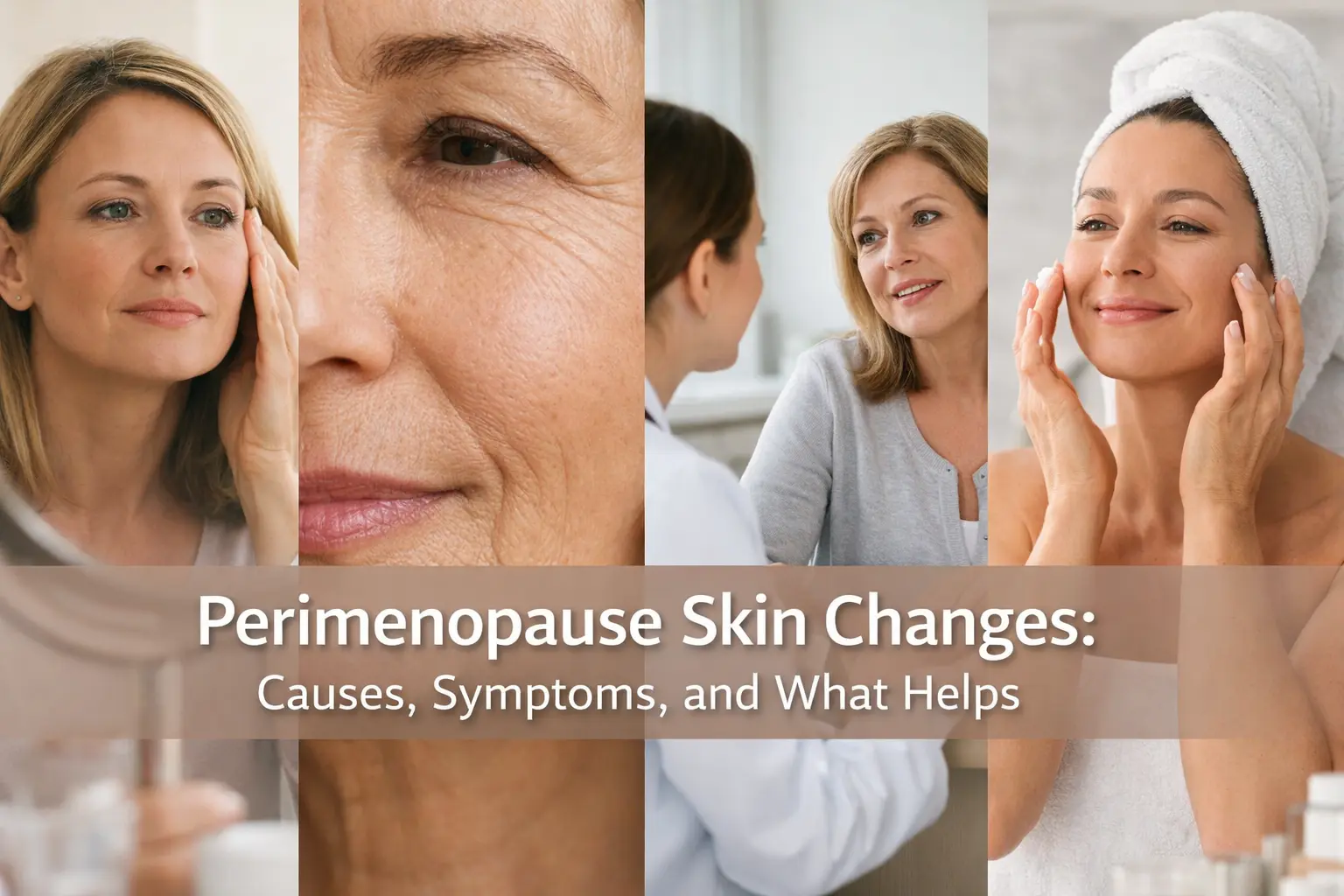
Perimenopause Skin Changes: Causes, Symptoms, and What Helps
Perimenopause skin changes happen because fluctuating hormone levels affect collagen, hydration, and oil production.
Common symptoms include dryness, itching, acne, sensitivity, and fine lines.
Most women can improve symptoms with gentle skincare, sun protection, and medical support when needed.
Perimenopause skin changes are common and often confusing.
Many women notice their skin suddenly feels drier, more sensitive, or prone to breakouts in their 40s.
Others experience itching, redness, or fine lines that seem to appear almost overnight.
These changes happen because hormone levels fluctuate during perimenopause.
Estrogen, which helps keep skin hydrated, firm, and resilient, begins to decline.
As a result, the skin’s barrier weakens, collagen decreases, and oil production shifts.
The good news: most perimenopause skin problems are manageable with the right skincare routine, lifestyle habits, and medical support like hormone therapy when needed.
What Happens to Your Skin During Perimenopause?
Perimenopause is the transition phase before menopause, and it can last several years.
Unlike menopause, when estrogen drops more steadily, perimenopause involves ongoing hormonal fluctuations.
These ups and downs can affect the skin in noticeable ways.
Estrogen plays a major role in:
- Collagen production (firmness and elasticity)
- Skin hydration and barrier strength
- Oil (sebum) balance
- Wound healing and repair
As estrogen declines, collagen levels may drop significantly over time, which contributes to thinner, less elastic skin.
At the same time, shifts in androgens can trigger breakouts or oiliness in some women.
This is why many women experience both dryness and acne during perimenopause.
Most Common Perimenopause Skin Changes and Symptoms
Here are the perimenopause skin symptoms many women notice:
| Skin Change | Why It Happens | What It Feels Like |
| Dry Skin | Reduced oil production + barrier weakening | Tight, flaky, rough texture |
| Itchy Skin | Barrier disruption + nerve sensitivity | Persistent irritation without rash |
| Acne | Hormonal imbalance increases oil production | Breakouts along jawline/chin |
| Sensitivity | Thinner skin + inflammation | Burning or stinging with products |
| Fine lines & wrinkles | Collagen loss | Crepey or loose skin |
| Uneven tone/pigmentation | Hormonal shifts + sun exposure | Dark spots or dullness |
Many women also notice their usual skincare routine stops working the same way during this stage.
What Skin Changes Happen First During Perimenopause?
Perimenopause skin changes often follow a pattern:
Early stage:
- Increased breakouts
- Oil fluctuations
- Mild sensitivity
Mid stage:
- Dryness and itching
- Increased redness
- Rough texture
Later stage:
- Thinning skin
- Wrinkles and sagging
- Slower healing
Understanding the timeline can help explain why your skin may feel unpredictable during this transition.
Less-Talked-About Perimenopause Skin Changes
Some perimenopause skin problems are less commonly discussed but still very real:
Burning or Tingling Sensations
Hormonal changes can affect nerve endings in the skin, leading to unusual sensations without visible irritation.
Rosacea Flare-Ups
Flushing and redness may worsen due to increased skin sensitivity and temperature regulation changes.
Slower Healing
Cuts, blemishes, and irritation may take longer to resolve due to reduced collagen and slower cell turnover.
What Causes Skin Changes During Perimenopause?
Let’s take a look at what can cause skin changes during perimenopause:
Estrogen Decline
Estrogen supports collagen and moisture retention.
As levels fall, skin becomes thinner, drier, and less elastic.
Reduced Oil Production
Lower estrogen reduces sebum levels, which can weaken the skin barrier and increase dryness.
Hormonal Fluctuations
Shifting estrogen and androgen levels may trigger acne, inflammation, and uneven texture.
Skin Barrier Changes
A weaker barrier makes skin more reactive to weather, skincare products, and environmental stressors.
Why Is My Skin Suddenly Dry in My 40s?
Many women ask this question during perimenopause.
Dryness often develops because declining estrogen reduces natural oil production while also weakening the skin barrier.
This makes moisture loss more likely and increases sensitivity to environmental triggers like weather and skincare products.
Can Perimenopause Cause Rashes or Sensitive Skin?
Yes.
Hormonal shifts during perimenopause can make skin more reactive.
Some women develop redness, irritation, or mild rashes.
Others notice their skin suddenly reacts to products they have used for years.
A gentler routine and medical guidance when needed can help manage these symptoms.
When Do Perimenopause Skin Changes Start?
Skin changes often begin in the early stages of perimenopause, sometimes before menstrual cycles become irregular.
Many women notice subtle shifts, like dryness or sensitivity, in their early to mid-40s.
For others, symptoms develop later.
The timing varies based on genetics, lifestyle, and hormone patterns.
When to See a Doctor
Consider medical care if you experience:
- Severe or persistent itching
- Sudden rashes or discoloration
- Acne that does not improve
- Burning or sensitivity interfering with daily life
These symptoms may need targeted treatment or evaluation for underlying conditions.
Key Takeaways About Perimenopause Skin Changes
- Hormonal shifts drive most skin changes
- Dryness, itching, and sensitivity are most common
- Gentle routines usually work best
- Professional care helps when symptoms persist
How Women’s Wellness of Mississippi Can Help
Perimenopause affects every woman differently.
At Women’s Wellness of Mississippi in Mississippi, care focuses on identifying the root cause of symptoms rather than just treating them.
Providers may recommend hormone therapy, personalized skincare guidance, and treatment options tailored to your goals and comfort level.
If your skin has changed and you’re unsure why, you’re not alone.
Understanding what’s happening and knowing what helps, can make this transition much easier to manage.
FAQs: Perimenopause Skin Changes
Does perimenopause cause skin changes?
Yes. Perimenopause often causes skin changes due to fluctuating hormone levels. Many women notice dryness, itching, sensitivity, acne, fine lines, and uneven tone during this stage.
What is the average age for perimenopause?
Perimenopause typically begins in the early to mid-40s, though some women notice symptoms in their late 30s. It can last several years before menopause begins.
What are lesser known symptoms of perimenopause?
Less commonly discussed symptoms include burning or tingling skin, increased sensitivity, rosacea flare-ups, slower wound healing, and sudden reactions to skincare products.
How can I improve my perimenopausal skin?
A gentle skincare routine, daily sunscreen, consistent hydration, and products with ceramides, retinoids, or antioxidants can help. Medical treatments may also improve symptoms when needed.
Can you rebuild collagen in your skin?
While collagen naturally declines with age, you can support production with sunscreen, retinoids, antioxidants, healthy nutrition, and professional treatments when appropriate.