
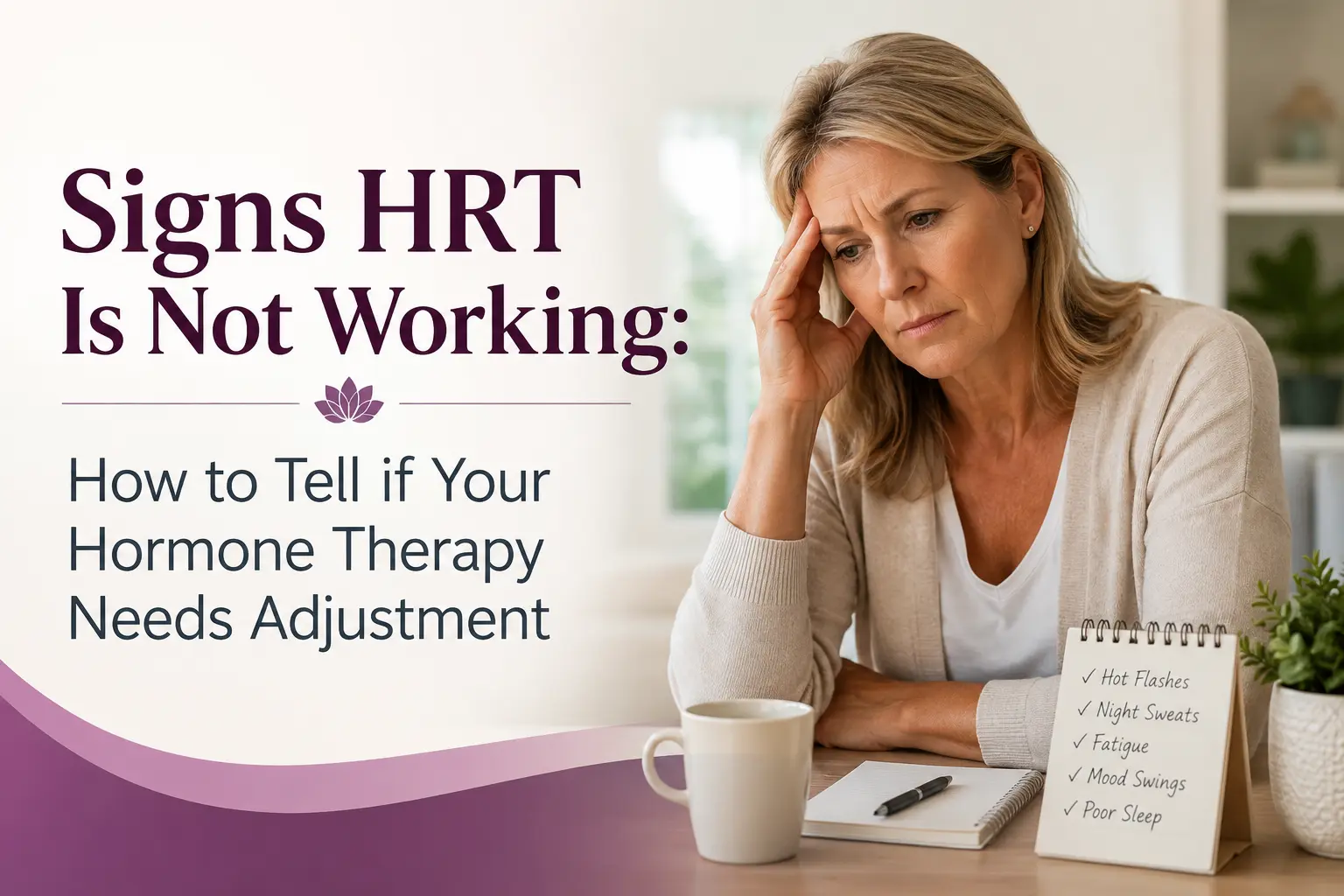
Signs HRT Is Not Working
Starting hormone replacement therapy (HRT) can be a life-changing step for women struggling with menopause symptoms.
Many women begin treatment hoping to reduce hot flashes, improve sleep, stabilize mood, and regain the energy they once had.
But what happens when those improvements don’t come?
If you’re wondering whether your hormone therapy is working, you’re not alone.
One of the most common concerns women have after starting treatment is whether their ongoing symptoms mean their HRT isn’t effective.
The good news is that persistent symptoms don’t always mean hormone therapy has failed.
Finding the right treatment plan often takes time, and some women need dosage adjustments, a different delivery method, or additional evaluation before achieving optimal results.
Understanding the signs HRT is not working can help you recognize when it’s time to follow up with your healthcare provider and explore potential changes to your treatment plan.
What Are the Signs HRT Is Not Working?
The most common signs HRT is not working include persistent hot flashes, night sweats, fatigue, mood swings, sleep disturbances, brain fog, vaginal dryness, and little to no symptom improvement after several months of treatment.
While every woman’s experience is unique, symptoms that remain unchanged or worsen over time may indicate that your hormone therapy needs adjustment.
How Long Does HRT Take to Work?
One of the biggest misconceptions about hormone therapy is that it produces immediate results.
Although some women begin feeling better within a few weeks, many menopause symptoms improve gradually over several months.
Understanding this timeline can help you determine whether your treatment needs more time or whether it may require adjustment.
Within 2 to 4 Weeks
Many women notice early improvements such as:
- Fewer hot flashes
- Reduced night sweats
- Improved sleep quality
- Less frequent temperature fluctuations
- Within 1 to 3 Months
Additional benefits may include:
- Better mood stability
- Reduced irritability
- Improved concentration
- Increased energy levels
- Less anxiety related to menopause symptoms
- Within 3 to 6 Months
Some of the slower-to-improve symptoms include:
- Vaginal dryness
- Discomfort during intimacy
- Skin dryness
- Urinary symptoms
- Overall quality of life
If you’ve been taking HRT consistently for three to six months and still haven’t noticed meaningful improvements, it may be time to reevaluate your treatment plan.
10 Signs HRT Is Not Working
Let’s look at some of the signs your HRT may need adjusting:
1. Your Hot Flashes Haven’t Improved
Hot flashes are one of the hallmark symptoms of menopause and one of the primary reasons women seek HRT.
While occasional hot flashes can still occur, most women experience a noticeable reduction in their frequency and severity.
If your hot flashes remain unchanged after several months, your dosage or treatment approach may need adjustment.
2. Night Sweats Continue to Disrupt Your Sleep
Persistent night sweats can significantly affect sleep quality and daily functioning.
If you’re still waking up drenched in sweat, changing clothes during the night, or struggling to get restful sleep, your hormones may not yet be adequately balanced.
3. You Still Have Trouble Sleeping
Many women notice improvements in sleep after starting HRT, particularly when hot flashes and night sweats improve.
However, if you continue to experience:
- Difficulty falling asleep
- Frequent nighttime waking
- Early morning awakening
- Poor sleep quality
…your treatment may not be fully addressing your symptoms.
4. Mood Swings Remain a Daily Struggle
Hormonal fluctuations can affect emotional health just as much as physical health.
Persistent symptoms such as:
- Irritability
- Anxiety
- Increased emotional sensitivity
- Mood swings
- Low mood
…may indicate that your hormone levels need to be checked and adjusted.
5. Fatigue and Low Energy Persist
Many women expect to feel more energetic after starting HRT.
Although hormone therapy isn’t a cure for every cause of fatigue, persistent exhaustion can be a sign that menopause symptoms remain inadequately controlled.
If you’re still feeling drained despite treatment, additional evaluation may be needed.
6. Brain Fog Hasn’t Improved
Brain fog is one of the most frustrating menopause symptoms.
If you’re still experiencing:
- Forgetfulness
- Difficulty concentrating
- Mental fatigue
- Reduced focus
- Trouble finding words
…after several months of treatment, your provider may need to reassess your hormone therapy.
7. Vaginal Dryness or Pain During Sex Continues
Hormonal changes can affect vaginal tissues, causing dryness, irritation, and discomfort during intimacy.
Although many women experience improvement with HRT, persistent symptoms may indicate that additional treatment options are needed.
8. Your Symptoms Improved Then Came Back
Some women initially experience significant relief after starting HRT only to notice symptoms gradually returning.
This can happen because hormone needs may change over time.
Returning symptoms don’t necessarily mean treatment has stopped working completely, but they may signal the need for reassessment.
9. You’ve Developed New Symptoms Since Starting HRT
While some mild side effects can occur during the adjustment period, new symptoms should not be ignored.
Symptoms that may warrant further evaluation include:
- Frequent headaches
- Significant bloating
- Breast tenderness
- Nausea
- Mood changes
- Fluid retention
10. You Feel No Different After Several Months
One of the clearest signs HRT is not working is a complete lack of improvement.
If you’ve followed your treatment plan consistently for three to six months and still feel exactly the same, it’s important to discuss your symptoms with your healthcare provider.
Why Is My HRT Not Working?
There isn’t always a single explanation for persistent menopause symptoms.
Several factors can affect how well hormone therapy works.
Your Dosage May Be Too Low
One of the most common reasons women continue experiencing symptoms is that their hormone dosage isn’t high enough to provide adequate relief.
When hormone levels remain too low, symptoms such as hot flashes, fatigue, sleep disturbances, and mood changes may persist.
Your Dosage May Be Too High
More hormone isn’t always better.
Hormone levels that are too high can sometimes create symptoms that mimic hormonal imbalance, including headaches, bloating, breast tenderness, and mood changes.
You Haven’t Been on HRT Long Enough
Some symptoms improve quickly, while others take months.
It’s important to evaluate progress over an appropriate timeframe before deciding whether treatment is ineffective.
The Delivery Method May Not Be Right for You
Hormones can be delivered through:
- Oral medications
- Skin patches
- Topical gels
- Creams
- Vaginal preparations
Some women respond better to one method than another.
Other Medical Conditions May Be Contributing
Many menopause symptoms overlap with other health conditions.
Persistent symptoms may be related to:
- Thyroid disorders
- Sleep apnea
- Anxiety
- Depression
- Vitamin deficiencies
- Chronic stress
This is why a comprehensive evaluation is often necessary when symptoms continue despite treatment.
Lifestyle Factors Can Affect Results
Hormone therapy works best as part of a broader approach to wellness.
Factors that can worsen symptoms include:
- Poor sleep habits
- Chronic stress
- Smoking
- Excess alcohol consumption
- Limited physical activity
Addressing these factors may help improve symptom management.
Signs Your HRT Dose May Be Too Low
Many women ask how they can tell whether they need a higher dose of HRT.
Potential signs include:
- Ongoing hot flashes
- Persistent night sweats
- Continued fatigue
- Poor sleep
- Mood swings
- Brain fog
- Vaginal dryness
- Low quality of life despite treatment
Only your healthcare provider can determine whether increasing your dosage is appropriate.
Signs Your HRT Dose May Be Too High
A dosage that’s too high can also create unwanted symptoms.
Possible signs include:
- Breast tenderness
- Bloating
- Water retention
- Frequent headaches
- Nausea
- Mood changes
- Increased irritability
If these symptoms appear after starting treatment or following a dosage increase, it’s worth discussing them with your provider.
Can HRT Stop Working Over Time?
Many women wonder whether hormone therapy can stop working after months or years of successful treatment.
In most cases, HRT hasn’t suddenly become ineffective.
Instead, your body’s hormone needs may have changed.
As women age, shifts in metabolism, body composition, hormone sensitivity, and overall health can affect how hormone therapy works.
Periodic adjustments may be necessary to maintain symptom relief.
If symptoms return after a period of improvement, a follow-up appointment can help determine whether changes are needed.
What Should You Do If HRT Is Not Working?
If you suspect your treatment isn’t providing adequate relief, don’t stop taking your medication without consulting your healthcare provider.
Instead, consider the following steps.
Track Your Symptoms
Keeping a symptom journal can help identify patterns and provide valuable information during follow-up visits.
Review Your Timeline
Make sure you’ve given your body enough time to respond to treatment before assuming it isn’t working.
Evaluate Other Health Factors
Sleep quality, stress levels, diet, exercise habits, and underlying medical conditions can all influence how you feel.
Schedule a Follow-Up Appointment
Your provider can review your symptoms, assess your treatment plan, and determine whether adjustments may help.
Discuss Alternative Treatment Approaches
In some cases, changing the dosage, delivery method, or overall treatment strategy may improve results.
Signs HRT Is Working
It can sometimes be easier to focus on symptoms that remain than to recognize the improvements that have already occurred.
Positive signs that HRT is working may include:
- Fewer hot flashes
- Less frequent night sweats
- Better sleep quality
- Improved mood
- Increased energy
- Better concentration
- Reduced vaginal dryness
- Improved sexual comfort
- Greater overall well-being
Many women notice gradual improvements over time rather than dramatic overnight changes.
When Should You Contact Your Healthcare Provider?
You should schedule a follow-up appointment if:
- Your symptoms haven’t improved after three to six months
- Symptoms are becoming worse
- New symptoms have developed
- Symptoms improved but later returned
- Side effects are affecting your quality of life
- You’re unsure whether your treatment is working
Regular follow-up care can help ensure your treatment continues to meet your changing needs.
Final Thoughts: Signs HRT Is Not Working
If you’re experiencing signs HRT is not working, remember that persistent symptoms don’t automatically mean hormone therapy has failed.
Every woman’s body responds differently, and finding the right treatment plan often requires time and fine-tuning.
Whether your symptoms haven’t improved, have returned after initial success, or you’ve developed new concerns, working closely with your healthcare provider can help identify the underlying cause and determine the best next steps.
With the right approach, many women are able to achieve meaningful relief from menopause symptoms and improve their overall quality of life.
FAQs: Signs HRT Is Not Working
Is It Normal for HRT Not to Work Right Away?
Yes. Many women notice some symptom improvement within a few weeks, but full benefits often take three to six months. Certain symptoms, such as vaginal dryness and sexual discomfort, may take longer to improve than hot flashes and night sweats.
Can Stress Make HRT Seem Less Effective?
Yes. Chronic stress can contribute to poor sleep, fatigue, anxiety, and mood changes, many of which overlap with menopause symptoms. Managing stress may improve overall symptom control.
Does Weight Affect How Well HRT Works?
Body composition can influence hormone metabolism and how individuals respond to treatment. This is one reason why hormone therapy should be individualized rather than using a one-size-fits-all approach.
How do you know if your HRT needs adjusting?
Your HRT may need adjusting if menopause symptoms such as hot flashes, night sweats, mood swings, fatigue, brain fog, or sleep problems continue after several months of treatment. You may also need an adjustment if symptoms initially improved but later returned, or if you develop side effects such as bloating, headaches, or breast tenderness.
What are the first signs that HRT is not working?
The first signs that HRT is not working are often persistent hot flashes, ongoing night sweats, poor sleep, fatigue, mood changes, and brain fog that show little improvement over time. While studies show HRT can take several weeks or months to reach its full effect, symptoms that remain unchanged after consistent use may indicate that your treatment plan needs to be reassessed.
How do I know if I need more or less estrogen?
If you need more estrogen, you may continue experiencing symptoms such as hot flashes, night sweats, vaginal dryness, mood swings, and poor sleep. If you need less estrogen, you may develop symptoms such as bloating, breast tenderness, headaches, nausea, or fluid retention. Because symptoms can overlap, the best way to determine the right dosage is through an evaluation with your healthcare provider.