
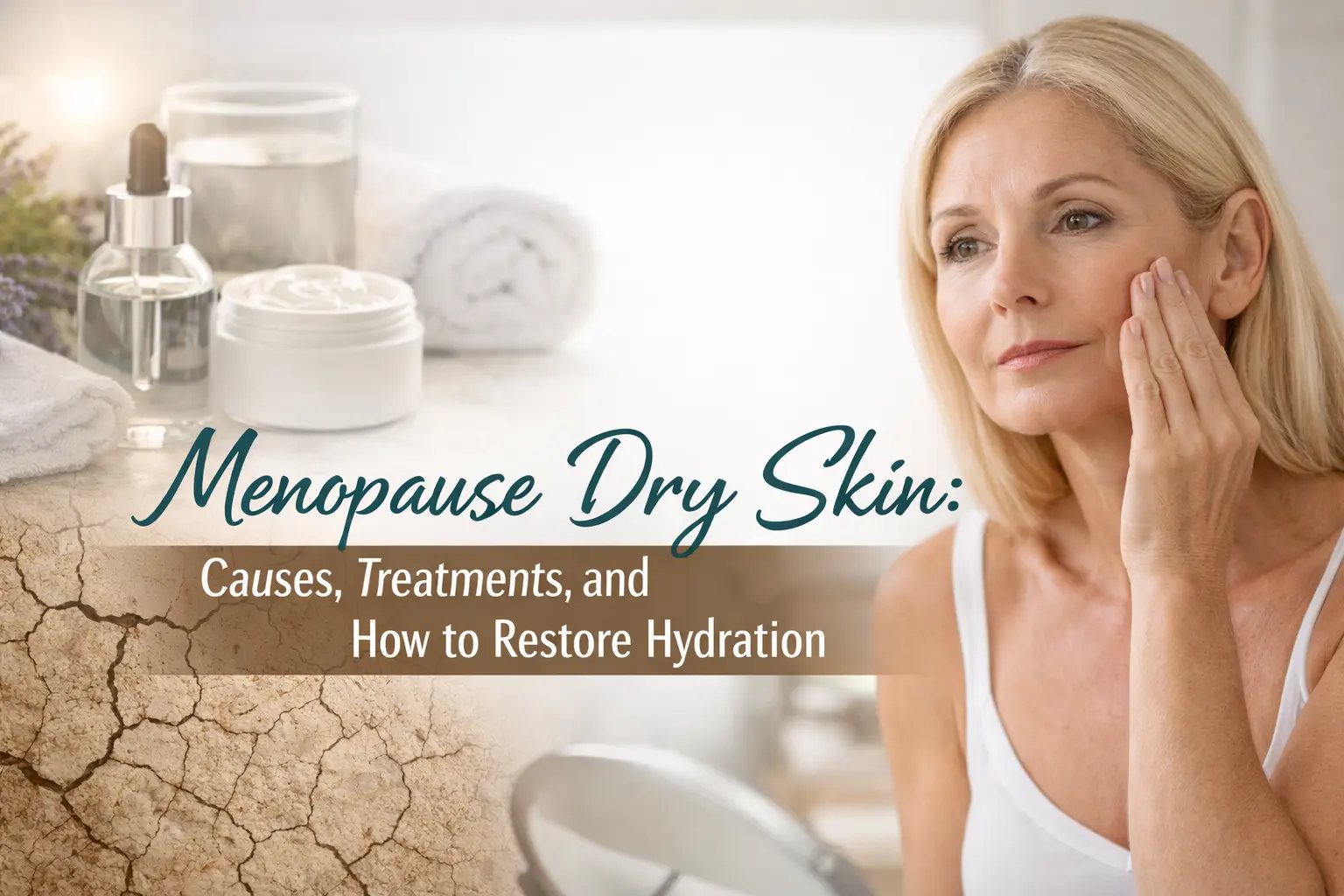
Menopause Dry Skin
Many women notice their skin becoming noticeably drier during menopause.
Skin that once felt smooth and hydrated may suddenly feel tight, flaky, itchy, or more sensitive than usual.
If you are dealing with menopause dry skin, you are not alone.
Hormonal changes during perimenopause and menopause can significantly affect your skin’s ability to retain moisture.
Menopause dry skin is a common symptom caused by declining estrogen levels, which reduce the skin’s natural oil production, collagen levels, and ability to retain moisture.
This can lead to tightness, itching, flaking, sensitivity, and more visible fine lines during perimenopause and menopause.
Why Menopause Causes Dry Skin (Hormonal Changes Explained)
One of the main reasons menopause dry skin occurs is declining estrogen levels.
Estrogen plays an important role in maintaining skin thickness, elasticity, and moisture.
As estrogen decreases, the skin produces less natural oil and loses some of its ability to hold water.
Many women ask whether menopause causes dry skin.
The answer is yes, hormonal changes can significantly reduce the skin’s natural moisture levels and weaken the skin barrier.
These hormonal changes can lead to:
- Reduced collagen production
- Thinner skin
- Increased dryness
- More visible fine lines
- Increased sensitivity or irritation
Estrogen also supports the skin barrier, which helps protect against environmental irritants.
When this barrier weakens, skin may feel rough, tight, or easily irritated.
Perimenopause Dry Skin: Why Symptoms Can Start Early
Dry skin does not always begin suddenly at menopause.
Many women start to notice changes during perimenopause, often in their 40s, when hormone levels begin to fluctuate.
Early signs may include:
- Skin feeling less smooth than usual
- Makeup settling into fine lines
- Increased sensitivity to products
- Occasional itching or irritation
- Dull or uneven skin tone
As hormone levels continue to shift, dryness may become more noticeable and persistent over time.
Common Skin Changes During Menopause
Menopause affects more than just hydration.
Hormonal changes can influence several aspects of skin health.
Common menopause skin changes include:
- Dryness: Skin may feel tight, flaky, or rough.
- Itching: Dry skin can lead to uncomfortable itching, sometimes called menopausal pruritus.
- Thinning skin: Lower collagen levels can make skin feel more delicate.
- Wrinkles and fine lines: Reduced elasticity can make lines more noticeable.
- Increased sensitivity: Skin may react more easily to products or environmental triggers.
- Slower healing: Skin may take longer to recover from irritation or injury.
Why Menopause Causes Itchy Skin
Itching is one of the most frustrating symptoms associated with menopause dry skin.
Some women notice itching throughout the day, while others experience it more at night.
This happens for several reasons:
- Reduced moisture makes skin more prone to irritation
- A weakened skin barrier allows irritants to penetrate more easily
- Hormonal changes can increase skin sensitivity
- Changes in nerve signaling may make itching feel more intense
When dryness and itching occur together, treating the underlying skin barrier and hydration is key to relief.
Best Ingredients for Menopause Dry Skin
Using the right skincare ingredients can make a significant difference in improving hydration and supporting the skin barrier.
Look for moisturizers containing:
- Hyaluronic acid: Helps attract and retain moisture in the skin.
- Ceramides: Support the skin barrier and help prevent moisture loss.
- Glycerin: Draws moisture into the skin.
- Niacinamide: Supports skin barrier function and reduces irritation.
- Peptides: Help support collagen production.
- Squalane or shea butter: Provide long-lasting moisture and help soften skin.
Simple Skincare Routine for Menopausal Skin
A consistent skincare routine can help improve hydration and comfort.
Morning routine:
- Use a gentle cleanser that does not strip natural oils
- Apply a hydrating serum with hyaluronic acid
- Use a rich moisturizer to seal in hydration
- Apply sunscreen to protect thinning skin
Evening routine:
- Cleanse with a gentle, hydrating cleanser
- Apply a nourishing serum or cream
- Use a thicker moisturizer at night to support overnight repair
Over-exfoliating can worsen menopause dry skin, so limit exfoliation to once or twice per week if needed.
Lifestyle Tips That Help Improve Menopause Dry Skin
Daily habits can also influence skin health during menopause.
Helpful strategies include:
- Drink adequate water throughout the day
- Use a humidifier in dry environments
- Avoid very hot showers that can strip moisture
- Choose mild soaps and cleansers
- Manage stress levels
- Eat foods rich in healthy fats, such as avocados, nuts, and olive oil
These habits help support the skin’s natural moisture barrier.
Does Hormone Therapy Help Menopause Dry Skin?
Because estrogen plays an important role in skin hydration, some women notice improvements in skin dryness when hormone levels are balanced.
Hormone therapy may help:
- Improve skin thickness
- Increase collagen production
- Improve elasticity
- Reduce dryness and irritation
Hormonal support can also improve other symptoms such as fatigue, mood changes, and hot flashes.
However, treatment is not one-size-fits-all.
A provider can evaluate your symptoms and hormone levels to determine whether hormone therapy or other options are appropriate.
Medical Treatments for Severe Dry Skin
When menopause dry skin becomes persistent or uncomfortable, professional treatments may help improve skin quality and hydration.
Options may include:
- Prescription-strength topical treatments
- Medical-grade skincare products
- Evaluation for hormone imbalance
- Treatment for underlying skin conditions such as eczema or dermatitis
Addressing hormonal changes may improve multiple symptoms at once, including dry skin, itching, and sensitivity.
Symptoms That Often Occur Alongside Menopause Dry Skin
Menopause dry skin is often part of a broader group of hormonal symptoms.
You may also notice:
- Itchy skin, especially at night
- Increased sensitivity to skincare products
- Fine lines and wrinkles becoming more visible
- Thinning or fragile skin
- Hair thinning
- Vaginal dryness
- Changes in skin tone or texture
Recognizing these patterns can help guide more effective treatment.
When to See a Provider About Menopause Skin Changes
Occasional dryness is common, but persistent symptoms may benefit from evaluation.
Consider speaking with a provider if you experience:
- Severe dryness that does not improve with moisturizers
- Persistent itching or irritation
- Sudden skin sensitivity
- Skin changes that affect your quality of life
- Multiple menopause symptoms occurring at the same time
A personalized approach can help address both skin symptoms and underlying hormonal changes.
How Women’s Wellness of Mississippi Can Help
Women’s Wellness of Mississippi provides personalized care for women experiencing symptoms related to perimenopause and menopause, including dry skin caused by hormonal changes.
Care may include:
- Hormone level evaluation
- Comprehensive symptom assessment
- Personalized treatment planning including hormone therapy
- Guidance on managing menopause-related changes
By addressing the root cause of symptoms, treatment can support not only skin health but also overall well-being.
Key Takeaway: Menopause Dry Skin
Menopause dry skin is a common and treatable symptom caused by declining estrogen levels and changes in the skin barrier.
With the right skincare ingredients, supportive lifestyle habits, and medical guidance when needed, it is possible to improve skin hydration and comfort.
If dry skin is affecting your daily comfort, understanding the underlying hormonal changes can help you take the right steps toward healthier, more resilient skin.
FAQs: Menopause Dry Skin
What helps dry skin during menopause?
Dry skin during menopause often improves with a combination of gentle skincare, lifestyle adjustments, and addressing hormonal changes. Using moisturizers that contain hyaluronic acid, ceramides, peptides, or glycerin can help restore hydration and strengthen the skin barrier. Staying hydrated, avoiding harsh cleansers, using a humidifier, and protecting skin from excessive heat can also help improve dryness. In some cases, hormone therapy or medical treatments may help address the underlying cause of menopause-related skin dryness.
What is the end of menopause?
Menopause is considered complete when a woman has gone 12 consecutive months without a menstrual period. After this point, a woman enters postmenopause. Although hormone levels stabilize, symptoms such as dry skin may continue because estrogen levels remain lower than before menopause.
Does menopause dryness ever go away?
Menopause dryness can improve with proper skincare, lifestyle adjustments, and medical treatment when appropriate. While hormone levels do not return to pre-menopause levels, many women find that symptoms become more manageable once they establish an effective treatment plan and consistent skin care routine.
What does menopausal dryness feel like?
Menopausal dryness often feels like tight, rough, or flaky skin. Some women experience itching, irritation, or increased sensitivity to products. Vaginal dryness may feel uncomfortable, irritated, or less naturally lubricated than before menopause. Symptoms can range from mild to more noticeable depending on hormone levels and individual skin type.
Does your body go back to normal after menopause?
After menopause, hormone levels remain consistently lower than during reproductive years, so the body does not fully return to its previous hormonal state. However, many symptoms can improve with proper care and treatment. Many women feel balanced and healthy after menopause once they find the right approach to managing symptoms.