
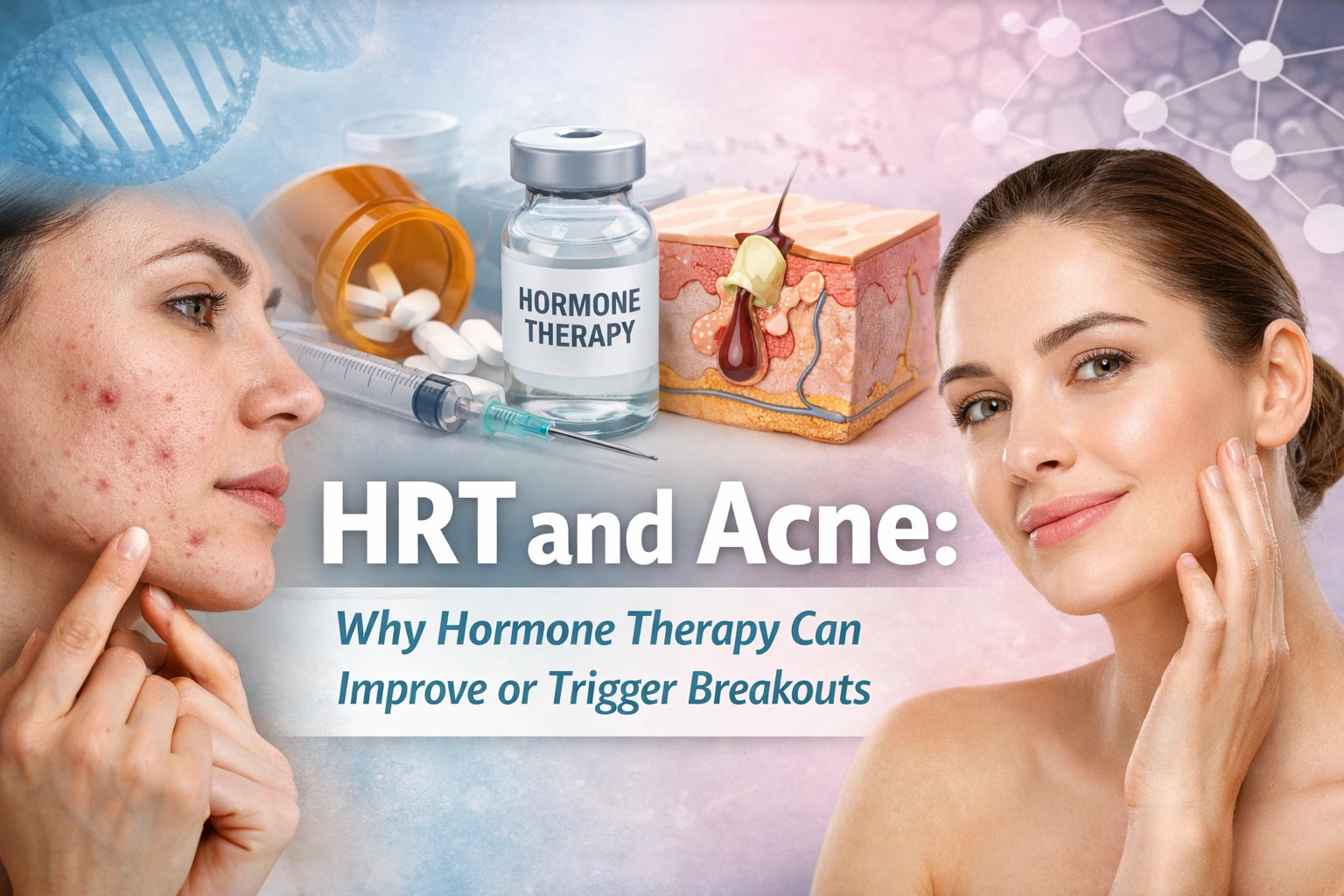
HRT and Acne
Hormone Replacement Therapy (HRT) can improve many menopause symptoms, including hot flashes, mood changes, and sleep disturbances.
But some women notice an unexpected change after starting treatment, acne.
If you are experiencing breakouts after starting HRT, you are not alone.
Hormonal changes directly affect oil production, inflammation, and skin cell turnover.
Depending on the type of hormones used and how your body responds, HRT can either improve acne or make it worse.
Understanding how hormones influence the skin can help you know what to expect and what options are available if acne develops during treatment.
Does HRT Cause Acne or Help It?
HRT can either improve or trigger acne depending on the balance of hormones used.
Estrogen often helps reduce oil production, while progesterone or testosterone may increase breakouts in some women.
Some patients experience temporary acne as the body adjusts to new hormone levels, while others notice clearer skin once hormones stabilize.
What Is HRT?
Hormone Replacement Therapy (HRT) is a treatment used to restore declining hormone levels, most commonly during perimenopause and menopause.
HRT typically includes:
- Estrogen
- Progesterone
- Testosterone (in some cases)
These hormones help regulate many processes in the body, including skin health.
Hormonal balance plays an important role in oil production, collagen levels, skin thickness, and inflammation.
Because hormones directly affect the skin, starting or adjusting HRT may lead to noticeable changes in complexion.
Can HRT Cause Acne?
Yes, HRT can cause acne in some women.
This usually happens when hormone levels stimulate the sebaceous glands, which produce oil (sebum).
Excess oil can clog pores and create an environment where acne develops.
Breakouts may appear when:
- Androgen levels increase
- Progesterone levels are higher relative to estrogen
- Testosterone therapy is introduced
- The body is adjusting to new hormone levels
- Hormonal imbalance affects oil gland activity
Hormonal fluctuations can increase inflammation and make pores more likely to become blocked, leading to whiteheads, blackheads, or cystic acne.
Some women notice acne shortly after starting therapy, while others may develop breakouts after a dosage change.
Hormonal acne during perimenopause and menopause is common because estrogen levels decline over time, allowing androgens to have a stronger influence on oil production.
Can HRT Improve Acne?
HRT can also improve acne, especially when estrogen helps reduce excess oil production and stabilize hormonal fluctuations.
Estrogen supports skin health by:
- Reducing sebum production
- Improving skin thickness
- Supporting collagen production
- Improving hydration levels
- Reducing inflammation
- Supporting skin elasticity
Women who experienced hormonal acne earlier in life may notice clearer skin once hormone levels become more stable.
Balanced hormone therapy often leads to improved skin over time, particularly when estrogen levels are optimized relative to progesterone and testosterone.
Why Hormonal Changes Affect Skin
Hormones regulate how much oil your skin produces.
When hormones fluctuate, the skin may produce too much oil, increasing the likelihood of clogged pores.
Androgens, sometimes called “male hormones,” are present in women at lower levels.
These hormones stimulate oil glands.
When androgen activity increases, acne becomes more likely.
During menopause, estrogen levels decline.
This shift can allow androgens to have a stronger effect on the skin, leading to adult hormonal acne.
Other factors may also contribute to acne during hormone therapy, including:
- Stress levels
- Genetics
- Insulin resistance
- Inflammation
- Skincare product sensitivity
- Diet and lifestyle habits
Because multiple factors influence acne, treatment often involves addressing hormone balance as well as overall skin health.
Which Types of HRT Are Most Likely to Cause Acne?
Certain types of hormone therapy are more likely to trigger breakouts, especially if androgen activity increases or hormone levels are not balanced.
| Hormone | Potential Effect on Skin |
| Estrogen | May reduce oil production and improve skin hydration |
| Progesterone | May contribute to acne in some women |
| Testosterone | Can increase oil production and trigger breakouts |
| Balanced therapy | Often improves skin stability over time |
Progesterone sensitivity varies between individuals.
Some women tolerate progesterone well, while others may notice increased breakouts.
Testosterone therapy may increase sebum production, which can lead to acne in some patients.
Working with a provider can help determine the most appropriate hormone balance for your individual needs.
Can Bioidentical HRT Cause Acne?
Bioidentical hormones can still affect the skin because the body responds to hormone levels rather than the source of the hormone.
Bioidentical estrogen, progesterone, and testosterone function similarly to naturally occurring hormones.
If hormone levels increase oil production or influence inflammation, acne may develop.
Adjusting dosage or balancing hormone ratios may help reduce breakouts while maintaining the benefits of therapy.
Why Am I Breaking Out After Starting HRT?
Some women notice acne within the first few weeks or months after beginning hormone therapy.
This does not necessarily mean HRT is not working.
Hormone adjustments often take time, and the body may need a period of transition before levels stabilize.
Many patients notice:
- Breakouts in the first 1–3 months
- Gradual improvement as the body adapts
- Reduced inflammation once hormone levels are balanced
Hormonal acne treatments typically require several weeks before noticeable improvement occurs.
If acne persists, treatment adjustments may help restore balance.
How to Treat Acne While on HRT
Several approaches may help manage acne while continuing hormone therapy.
Adjusting Hormone Balance
Small adjustments to estrogen, progesterone, or testosterone levels may improve skin symptoms and reduce oil production.
Changing Delivery Method
Some patients respond differently to creams, patches, pellets, injections, or oral medications.
Medical Skincare
Prescription topical treatments or oral medications may help reduce inflammation and prevent clogged pores.
Supporting Skin Health
Healthy habits may support clearer skin:
- Gentle cleansing routines
- Non-comedogenic skincare products
- Consistent hydration
- Balanced nutrition
- Stress management
- Avoiding harsh or pore-clogging products
Because hormonal imbalance affects each person differently, individualized treatment often produces the best results.
When to Talk to a Provider
Persistent or severe acne may indicate hormone imbalance or sensitivity to certain medications.
A provider may recommend:
- Hormone level evaluation
- Adjusting dosage
- Changing hormone type
- Adding supportive treatments
- Evaluating other contributing factors
Patients in Mississippi often seek guidance when skin changes appear after starting hormone therapy.
Individualized care can help ensure hormone therapy supports overall wellness while minimizing unwanted side effects.
Benefits of HRT Beyond Skin Health
While skin changes can occur, HRT is commonly used to support overall wellness during perimenopause and menopause.
Potential benefits include:
- Reduced hot flashes
- Improved sleep
- Mood stabilization
- Bone health support
- Improved vaginal tissue health
- Reduced menopause symptoms
- Improved quality of life
Skin changes are only one aspect of hormone therapy.
Many women find that balanced treatment supports long-term health and comfort.
HRT and Acne: What to Expect
Hormone therapy affects each person differently.
Some women notice clearer skin, while others experience temporary breakouts during adjustment.
In many cases, acne improves as hormone levels stabilize and treatment is personalized.
Understanding how hormones influence the skin can help you feel more confident navigating changes and finding the right balance for your health.
Women’s Wellness of Mississippi supports patients throughout perimenopause and menopause by evaluating symptoms, adjusting treatment plans when needed, and helping individuals feel their best at every stage of life.
FAQs: HRT and Acne
How to get rid of estrogen acne?
Estrogen-related acne often improves when hormone levels are balanced properly. Treatment may include adjusting HRT dosage, improving skincare routines, using non-comedogenic products, and reducing inflammation. Some patients benefit from topical treatments or medications that regulate oil production. Working with a provider can help identify whether estrogen levels are too high, too low, or imbalanced relative to progesterone or testosterone.
How long does acne last when starting HRT?
Acne that appears after starting HRT is often temporary. Many women notice breakouts within the first few weeks as hormone levels begin to shift. In many cases, skin improves within 2 to 3 months once hormone levels stabilize. If acne continues beyond a few months, adjusting the dosage or type of therapy may help.
How do I know if my HRT is too high or too low?
Hormone levels that are too high or too low may cause symptoms such as acne, mood changes, breast tenderness, fatigue, headaches, or changes in sleep patterns. Skin breakouts may occur when hormones are not balanced properly. A provider can evaluate symptoms and hormone levels to determine whether adjustments are needed.
What clears up hormonal acne fast?
Hormonal acne often improves when hormone levels are stabilized and inflammation is reduced. Treatment options may include prescription topical products, gentle skincare routines, avoiding pore-clogging products, and supporting overall hormone balance. Some patients see improvement within several weeks, but full skin improvement may take a few months.
Does menopause cause dry skin?
Yes, menopause commonly causes dry skin due to declining estrogen levels. Estrogen helps maintain skin hydration, elasticity, and collagen production. As estrogen decreases during perimenopause and menopause, skin may become thinner, less elastic, and more prone to dryness or irritation. Some women also notice increased sensitivity, fine lines, or changes in skin texture. Hormone therapy may help improve skin hydration by supporting more balanced hormone levels.