

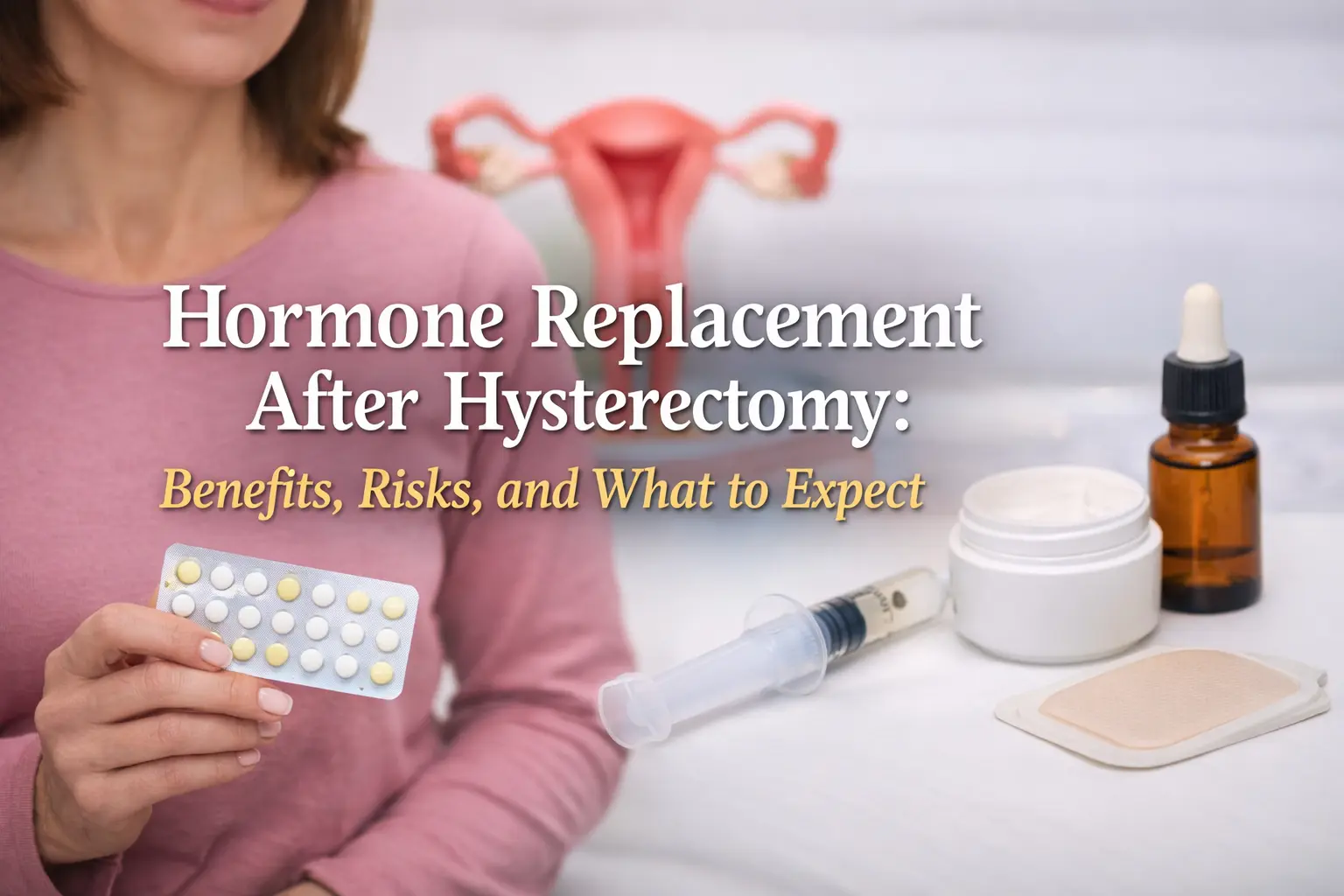
Hormone Replacement After Hysterectomy: What to Expect
Many women wonder whether hormone replacement after hysterectomy is necessary, safe, or beneficial.
The answer depends on several factors, including whether the ovaries were removed, your age, symptoms, and overall health.
A hysterectomy can significantly affect hormone levels, especially if the ovaries are removed.
Because hormones like estrogen, progesterone, and testosterone play an important role in energy, mood, metabolism, bone strength, and sexual health, changes can impact quality of life.
Understanding how hormone therapy works after hysterectomy can help you make informed decisions about your health.
Do You Need Hormone Replacement After a Hysterectomy?
Not every woman needs hormone replacement therapy (HRT) after hysterectomy, but many benefit from it.
The biggest factor is whether the ovaries were removed.
If the ovaries were removed (oophorectomy), estrogen levels often drop quickly.
This can trigger surgical menopause, which may cause symptoms such as:
- hot flashes
- night sweats
- mood changes
- vaginal dryness
- fatigue
- sleep problems
- brain fog
- reduced libido
- weight changes
If the ovaries were not removed, hormone levels may still decline earlier than expected, but symptoms are often less severe.
Hormone therapy may help restore hormonal balance and improve symptoms that affect daily life.
Many women specifically search for answers about HRT after hysterectomy with ovaries removed or HRT after hysterectomy without ovaries removed, as treatment needs can vary significantly depending on the type of surgery performed.
How Hormones Change After a Hysterectomy
Hormonal changes depend on the type of surgery performed.
Hysterectomy With Ovaries Intact
When the uterus is removed but the ovaries remain, the ovaries may continue producing hormones.
However, some women experience reduced hormone levels over time due to decreased blood flow to the ovaries.
Symptoms may still develop gradually, including:
- low energy
- mood changes
- sleep disturbances
- mild hot flashes
- reduced libido
Hormone therapy may or may not be needed.
Hysterectomy With Ovaries Removed
When both ovaries are removed, estrogen and progesterone levels drop quickly.
This can lead to immediate menopause symptoms, sometimes more intense than natural menopause.
Women who undergo ovary removal before natural menopause may have increased risk of:
- bone density loss
- cardiovascular concerns
- memory changes
- vaginal dryness
- reduced muscle mass
- fatigue
Hormone therapy may help reduce these risks and improve quality of life.
Surgical Menopause Explained
Surgical menopause occurs when menopause happens suddenly due to ovary removal.
Because the hormonal decline is rapid, symptoms can feel more intense than gradual menopause.
Women under age 45 who experience surgical menopause often benefit from hormone therapy to support long-term health.
Hormone Changes Timeline After Hysterectomy
Hormonal shifts may occur quickly or gradually depending on whether the ovaries were removed.
First 2–6 weeks
Women who had their ovaries removed may begin experiencing symptoms such as:
- hot flashes
- night sweats
- fatigue
- mood changes
- sleep disruption
Women who kept their ovaries may notice minimal immediate changes.
First 3–6 months
Hormonal symptoms may become more noticeable, including:
- vaginal dryness
- brain fog
- irritability
- reduced libido
- changes in metabolism
Long-term changes
Without adequate hormone support, long-term effects may include:
- reduced bone density
- increased cardiovascular risk
- reduced muscle mass
- persistent fatigue
- cognitive changes
Hormone therapy may help support long-term wellness and symptom relief.
Symptoms of Hormonal Imbalance After Hysterectomy
Hormonal imbalance can affect multiple body systems.
Common symptoms include:
- hot flashes
- night sweats
- anxiety
- depression
- irritability
- brain fog
- difficulty concentrating
- fatigue
- vaginal dryness
- pain during intercourse
- low libido
- joint discomfort
- weight gain
- sleep disruption
- thinning hair
- dry skin
Symptoms vary from person to person.
Some women experience only mild changes, while others notice significant differences in energy and well-being.
What Hormones May Need to Be Replaced?
Hormone therapy may involve one or more hormones depending on individual needs.
Estrogen
Estrogen is the primary hormone affected after ovary removal.
It supports:
- bone health
- heart health
- skin elasticity
- vaginal tissue health
- cognitive function
- temperature regulation
Low estrogen is often responsible for hot flashes, night sweats, and vaginal dryness.
Many women consider estrogen therapy after hysterectomy to help restore balance and reduce symptoms.
Progesterone
Progesterone is often used alongside estrogen in women who still have a uterus.
However, some women without a uterus may still benefit from progesterone for:
- sleep support
- mood balance
- anxiety reduction
Testosterone
Testosterone is commonly associated with men, but women also produce small amounts.
Low testosterone may contribute to:
- reduced libido
- fatigue
- low motivation
- decreased muscle tone
- brain fog
Some women benefit from carefully monitored testosterone therapy.
Benefits of Hormone Replacement Therapy After Hysterectomy
Hormone therapy may provide several benefits.
Possible benefits include:
- reduction in hot flashes
- improved sleep
- improved mood stability
- increased energy levels
- improved libido
- better mental clarity
- support for bone density
- support for cardiovascular health
- improved vaginal comfort
- improved overall quality of life
Many women report feeling more like themselves once hormone levels are balanced.
Hormone Replacement After Hysterectomy by Age
Hormone needs often vary depending on age at the time of surgery.
Under age 40
Women who experience early surgical menopause may benefit from hormone therapy to support:
- bone strength
- heart health
- cognitive function
- hormonal balance
Early menopause may increase long-term health risks if hormones are not supported.
Ages 40–50
Women in this age group may experience noticeable menopause symptoms after ovary removal.
Hormone therapy may help manage:
- hot flashes
- mood changes
- fatigue
- sleep disruption
Treatment is often tailored to symptom severity and individual health factors.
Age 50 and older
Women closer to natural menopause may still benefit from hormone therapy depending on symptoms and health goals.
Some women choose short-term therapy for symptom relief, while others continue longer based on provider guidance.
Risks and Side Effects of HRT
Hormone therapy is not appropriate for everyone.
Potential risks vary depending on:
- age
- medical history
- hormone type
- dosage
- treatment duration
Possible side effects may include:
- breast tenderness
- bloating
- mild fluid retention
- headaches
- spotting (in some cases)
Women with certain medical conditions may need alternative approaches.
A personalized evaluation can help determine whether hormone therapy is appropriate.
Types of Hormone Replacement Therapy
Hormone therapy can be delivered in several forms.
Each option has advantages depending on lifestyle and preferences.
| Method | Description | Benefits |
| Pills | Oral Medication | Convenient |
| Patches | Applied to skin | Steady hormone levels |
| Creams | Applied topically | Flexible dosing |
| Pellets | Inserted under skin | Long-lasting |
| Injections | Periodic dosing | Consistent levels |
The best method depends on individual goals and medical history.
Benefits of Starting Hormone Therapy Earlier vs Later
Some women consider starting hormone therapy soon after surgery, while others explore treatment later.
Starting earlier may help:
- reduce severity of menopause symptoms
- support bone density
- support cardiovascular health
- maintain muscle mass
- improve quality of life
Women often ask whether they can begin therapy years after surgery.
In many cases, treatment may still provide benefits depending on individual health history.
An evaluation helps determine whether hormone therapy is appropriate at any stage.
How Long Should You Take Hormone Therapy After Hysterectomy?
There is no single timeline for hormone therapy.
Some women benefit from short-term therapy to manage symptoms.
Others choose longer-term support for bone health, cardiovascular support, and quality of life.
Treatment duration may depend on:
- symptom severity
- age at surgery
- health goals
- personal preferences
- risk factors
Regular monitoring helps ensure therapy remains appropriate.
When HRT May Not Be Recommended
Hormone therapy may not be suitable for individuals with certain medical histories.
Examples may include:
- certain hormone-sensitive cancers
- unexplained vaginal bleeding
- history of blood clotting disorders
- certain cardiovascular conditions
An individualized approach helps determine safe treatment options.
Bioidentical Hormone Therapy After Hysterectomy
Bioidentical hormones are designed to closely match hormones produced naturally in the body.
Some women prefer bioidentical hormone therapy because treatment can be customized to individual hormone levels, symptoms, and health goals.
Bioidentical hormone therapy may be delivered through creams, pellets, patches, or other methods depending on personal preference.
Personalized dosing and regular monitoring can help support hormone balance while minimizing unwanted side effects.
When to Talk to a Provider About Hormone Therapy
You may consider speaking with a provider if you experience:
- persistent fatigue
- low mood
- low libido
- hot flashes
- sleep problems
- vaginal dryness
- brain fog
- weight changes
- decreased motivation
Hormone therapy is not one-size-fits-all.
A personalized approach can help determine the most appropriate treatment plan.
Hormone Replacement Therapy After Hysterectomy at Women’s Wellness of Mississippi
Women’s Wellness of Mississippi provides individualized care for women experiencing hormonal changes after hysterectomy.
Treatment plans may include personalized hormone therapy based on symptoms, lab testing, and health goals.
Care is tailored to help support hormonal balance, symptom relief, and long-term wellness.
Women in Mississippi seeking guidance on hormone therapy can benefit from a professional evaluation to determine the most appropriate approach.
Conclusion: Hormone Replacement After Hysterectomy
Hormone replacement after hysterectomy can help support energy, mood, bone health, and overall well-being.
The need for therapy depends on whether the ovaries were removed, symptom severity, and individual health factors.
Understanding available options can help women make informed decisions about their health.
FAQs: Hormone Replacement After Hysterectomy
What hormones need to be replaced after a hysterectomy?
The hormones that may need to be replaced after a hysterectomy depend on whether the ovaries were removed. Estrogen is the most commonly replaced hormone because its levels often drop significantly after ovary removal. Some women may also benefit from progesterone to support sleep and mood, or testosterone to help with energy, libido, and mental clarity. A provider can determine which hormones are appropriate based on symptoms, medical history, and lab testing.
What are the benefits of HRT after a hysterectomy?
Hormone replacement therapy may help relieve symptoms caused by hormonal decline. Benefits may include reduced hot flashes, improved sleep, increased energy, improved mood stability, better mental clarity, improved vaginal comfort, and support for bone health. Some women also notice improved libido and overall quality of life when hormone levels are balanced.
How to tell if you have low estrogen after a hysterectomy?
Low estrogen symptoms may include hot flashes, night sweats, vaginal dryness, fatigue, mood changes, brain fog, sleep disturbances, thinning hair, and reduced libido. Some women also notice joint discomfort or changes in skin elasticity. Lab testing combined with symptom evaluation can help determine whether estrogen levels are low.
Who cannot take hormone replacement therapy?
Hormone replacement therapy may not be recommended for women with certain medical conditions, such as specific hormone-sensitive cancers, unexplained vaginal bleeding, certain blood clotting disorders, or uncontrolled cardiovascular conditions. A medical evaluation can help determine whether hormone therapy is appropriate based on personal health history and risk factors.
What are the first signs of menopause after a hysterectomy?
When the ovaries are removed, menopause symptoms may begin quickly. Early signs often include hot flashes, night sweats, mood changes, irritability, fatigue, sleep problems, and vaginal dryness. Some women also experience brain fog, decreased libido, or changes in metabolism. The severity and timing of symptoms can vary from person to person.