
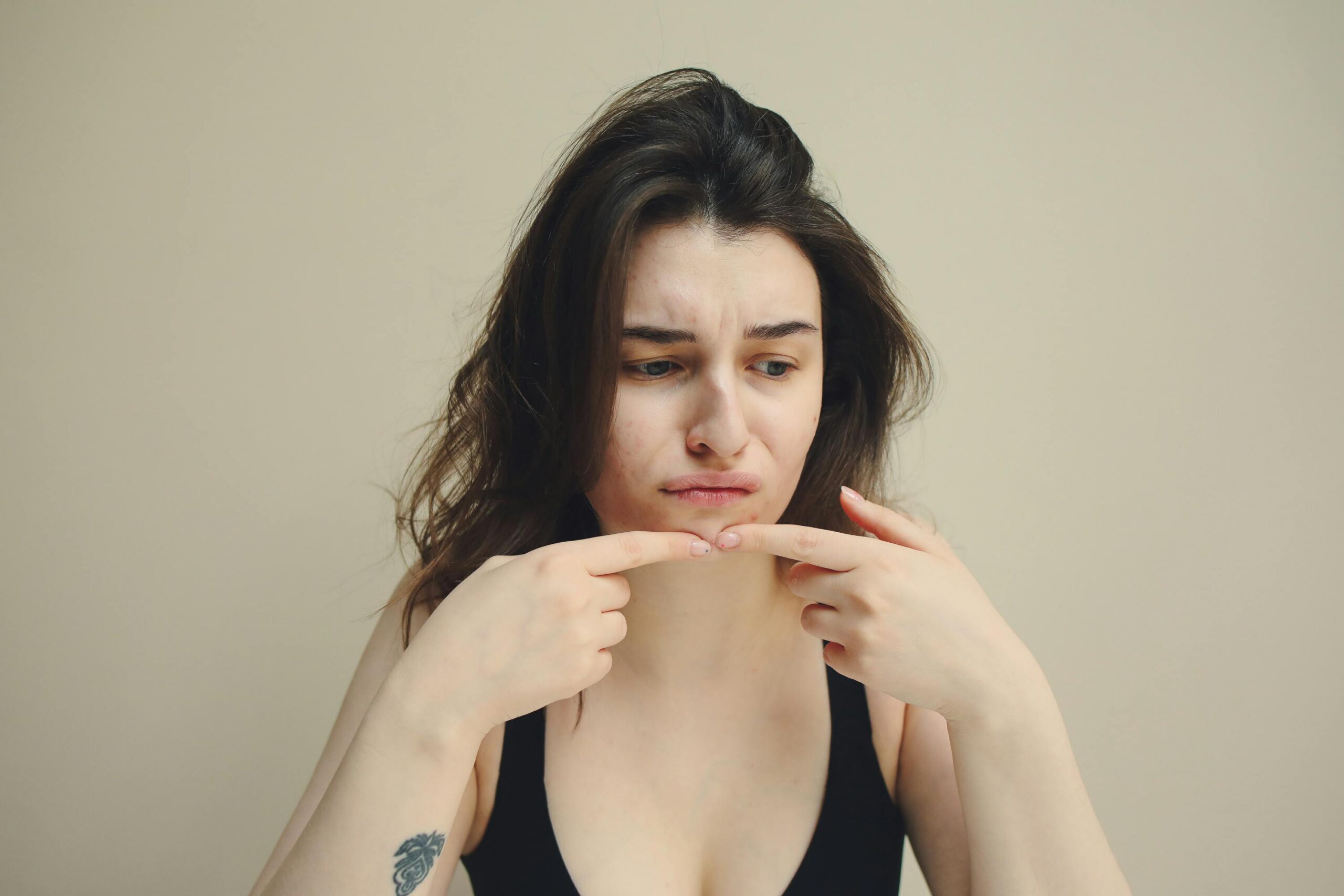
Perimenopause Acne
If you’re suddenly dealing with acne in your late 30s or 40s, you’re not alone.
Many women are surprised when breakouts appear during perimenopause, especially if they haven’t had acne since their teenage years, or ever.
This can be frustrating and confusing, but it’s actually a common symptom of hormonal changes.
Perimenopause acne is acne caused by hormonal fluctuations during the transition to menopause.
It happens primarily because estrogen levels decline, allowing androgens like testosterone to have a stronger effect on the skin.
This leads to increased oil production, clogged pores, inflammation, and breakouts.
Understanding the hormonal cause of perimenopause acne is the key to treating it effectively and improving your skin whether through skin care or hormone therapy.
What Is Perimenopause Acne?
Perimenopause acne refers to breakouts that occur during perimenopause, the transitional phase before menopause.
This stage typically begins between ages 35 and 45 and can last several years.
During this time, hormone levels fluctuate significantly, especially estrogen.
These hormonal shifts can directly affect your skin, increasing oil production and making acne more likely.
Unlike teenage acne, hormonal acne during perimenopause often appears suddenly and can be more persistent.
Does Perimenopause Cause Acne?
Yes, perimenopause can absolutely cause acne.
The primary reason is hormonal imbalance, especially declining estrogen levels relative to androgens.
Estrogen helps regulate oil production and keeps skin balanced.
When estrogen decreases, oil glands become more active.
Excess oil clogs pores, allowing bacteria and inflammation to develop.
This leads to acne, even if you’ve never experienced breakouts before.
Perimenopause acne is one of the most common skin-related symptoms of hormonal transition.
What Hormone Causes Acne During Perimenopause?
The main hormonal cause of perimenopause acne is declining estrogen combined with the continued presence of androgens like testosterone.
Estrogen and androgens work in balance.
Estrogen helps reduce oil production, while androgens stimulate oil glands.
During perimenopause, estrogen levels drop faster than androgen levels, creating a relative androgen dominance.
This hormonal imbalance leads to:
- Increased oil production
- Clogged pores
- Skin inflammation
- Persistent breakouts
Even if testosterone levels haven’t increased, the drop in estrogen allows testosterone to have a stronger effect on the skin.
This is why hormonal acne perimenopause is so common.
How Low Estrogen Causes Acne
Low estrogen acne is one of the most important and often overlooked causes of adult acne in women.
Estrogen plays several protective roles in skin health.
When estrogen levels decline, multiple changes occur that increase acne risk.
Low estrogen can cause:
- Increased oil production from sebaceous glands
- Slower skin cell turnover
- Increased inflammation
- Reduced skin healing
- Increased pore clogging
When oil production increases, pores become blocked more easily.
This creates an ideal environment for acne to develop.
Low estrogen acne can also make breakouts last longer and become more inflamed.
This is why treating the hormonal imbalance, not just the skin, is often necessary for long-term improvement.
What Does Perimenopause Acne Look Like?
Perimenopause acne often has distinct characteristics compared to acne earlier in life.
Common signs include:
- Acne along the chin and jawline
- Deep, painful cystic acne
- Breakouts on the lower face
- Acne that appears suddenly in adulthood
- Acne that worsens before your period
- Persistent breakouts that don’t respond to typical treatments
Jawline and chin acne are especially common because these areas are more sensitive to hormonal changes.
Hormonal acne perimenopause can also feel more inflamed and slower to heal.
Why Am I Breaking Out in My 40s?
Many women are surprised to develop acne in their 40s.
The main reason is hormonal imbalance caused by declining estrogen levels.
As estrogen decreases, androgens stimulate oil glands more strongly.
This increased oil production clogs pores and leads to breakouts.
Other contributing factors include:
- Slower skin regeneration
- Increased inflammation
- Stress
- Sleep disruption
- Hormonal fluctuations
These changes make skin more vulnerable to acne than it was before.
Low estrogen acne is one of the most common reasons women experience breakouts during this stage of life.
When Does Perimenopause Acne Start?
Perimenopause acne can begin anytime during perimenopause, which typically starts in the late 30s to early 40s.
You may notice acne appearing:
- While periods are still regular
- When cycles become irregular
- Alongside other symptoms like hot flashes or sleep changes
- Gradually or suddenly
For many women, acne is one of the earliest visible signs of hormonal transition.
Why Hormonal Acne Appears on the Chin and Jawline
The chin and jawline contain oil glands that are especially sensitive to hormonal changes.
When estrogen declines and androgens have a stronger influence, oil production increases in these areas.
This makes the chin and jawline more prone to clogged pores and inflammation.
Chin and jawline acne is one of the clearest signs of hormonal acne perimenopause.
Best Treatment for Perimenopause Acne
The most effective perimenopause acne treatment addresses the underlying hormonal imbalance, not just the skin itself.
Skincare Support
Gentle skincare can help reduce irritation and support healing.
Helpful approaches include:
- Using gentle cleansers
- Avoiding harsh or drying products
- Using non-comedogenic moisturizers
- Avoiding over-cleansing
Harsh treatments can worsen inflammation and make acne worse.
Lifestyle Support
Lifestyle factors can influence hormonal balance and skin health.
Helpful habits include:
- Getting adequate sleep
- Managing stress
- Eating a balanced diet
- Staying hydrated
While lifestyle changes alone may not fully resolve hormonal acne, they can help support treatment.
Hormonal Treatment
Because perimenopause acne is driven by hormonal imbalance, correcting hormone levels can be one of the most effective treatments.
Hormone therapy may help:
- Restore estrogen balance
- Reduce oil production
- Improve skin healing
- Reduce inflammation
- Prevent future breakouts
When hormones are balanced, the root cause of acne is addressed.
How Hormone Therapy Can Help Low Estrogen Acne
Hormone therapy works by restoring healthy estrogen levels and correcting the imbalance that causes acne.
When estrogen levels improve, oil production decreases, inflammation improves, and breakouts often become less frequent and less severe.
Hormone therapy may also improve other symptoms of perimenopause, including:
- Hot flashes
- Sleep disturbances
- Mood changes
- Fatigue
Addressing low estrogen acne at its source can lead to lasting improvement.
At Women’s Wellness of Mississippi in Madison, MS, hormone evaluations help identify estrogen imbalance and guide personalized treatment plans designed to restore balance and improve overall health.
When to See a Doctor for Perimenopause Acne
You should consider seeing a healthcare provider if:
- Acne appears suddenly in adulthood
- Breakouts are severe or painful
- Acne does not respond to over-the-counter treatments
- You have other perimenopause symptoms
- Acne is affecting your confidence
Hormonal evaluation can help identify whether low estrogen or hormonal imbalance is contributing to your acne.
Can Perimenopause Acne Go Away?
Yes, perimenopause acne can improve, especially when hormonal balance is restored.
Without treatment, acne may continue throughout perimenopause.
With proper care and hormone support, many women see significant improvement.
Treating low estrogen acne at its source provides the best long-term results.
Supporting Your Skin During Perimenopause
Supporting your skin during perimenopause involves both medical treatment and healthy skin habits.
Helpful steps include:
- Maintaining a consistent skincare routine
- Avoiding picking or squeezing acne
- Managing stress
- Prioritizing sleep
- Seeking medical evaluation when needed
These steps help support skin healing and prevent worsening breakouts.
When to Consider Hormone Testing
If acne appears alongside other perimenopause symptoms, hormone testing may help identify the underlying cause.
Hormone testing can evaluate:
- Estrogen levels
- Progesterone levels
- Overall hormonal balance
At Women’s Wellness of Mississippi in Madison, MS, personalized evaluations help determine whether hormonal imbalance is contributing to symptoms and guide appropriate treatment.
Conclusion: Perimenopause Acne
Perimenopause acne is a common and treatable symptom caused by hormonal changes, especially declining estrogen levels.
Low estrogen acne can increase oil production, clog pores, and lead to persistent breakouts.
Understanding the hormonal cause is the first step toward effective treatment.
With proper evaluation and personalized care, it’s possible to restore hormonal balance, improve skin health, and reduce breakouts.
Women experiencing acne and other perimenopause symptoms may benefit from hormone evaluation and treatment designed to address the root cause and support overall well-being.
FAQs: Perimenopause Acne
How do you treat perimenopausal acne?
Treating perimenopausal acne usually involves addressing the underlying hormonal imbalance, especially declining estrogen levels. Hormone therapy may help restore balance and reduce oil production, which can improve acne. Supportive skincare, stress management, and healthy lifestyle habits can also help reduce inflammation and support clearer skin. Because hormonal acne is driven by internal changes, treating the root cause is often more effective than relying on topical products alone.
What does perimenopause acne look like?
Perimenopause acne often appears as deep, inflamed pimples along the chin, jawline, and lower face. These breakouts may be cystic, painful, and slower to heal compared to acne earlier in life. You may also notice acne appearing suddenly in adulthood or becoming more persistent than usual. Hormonal acne during perimenopause tends to be more concentrated in the lower face rather than the forehead or cheeks.
When will menopausal acne stop?
Menopausal acne may improve once hormone levels stabilize after menopause, but this timeline varies for each woman. Some women notice improvement naturally, while others continue to experience acne if hormonal imbalance persists. Proper evaluation and treatment can help restore balance and improve symptoms more quickly, rather than waiting for hormones to stabilize on their own.
Why am I suddenly getting acne on my face in my 40s?
Sudden acne in your 40s is often caused by hormonal changes during perimenopause. As estrogen levels decline, androgens like testosterone have a stronger effect on the skin, increasing oil production and clogging pores. This hormonal imbalance can lead to breakouts even if you never had acne before. Stress, sleep disruption, and slower skin healing can also contribute.
What does low estrogen acne look like?
Low estrogen acne typically appears along the chin, jawline, and lower face. It often presents as deep, inflamed, or cystic breakouts that may be painful and persistent. The skin may also feel oilier than usual, and breakouts may take longer to heal. Low estrogen acne is commonly linked to hormonal imbalance during perimenopause.
What age does perimenopause start?
Perimenopause usually begins between ages 35 and 45, although it can start earlier or later. This phase can last several years before menopause. During this time, hormone levels fluctuate and gradually decline, which can lead to symptoms such as acne, irregular periods, sleep changes, and hot flashes.